
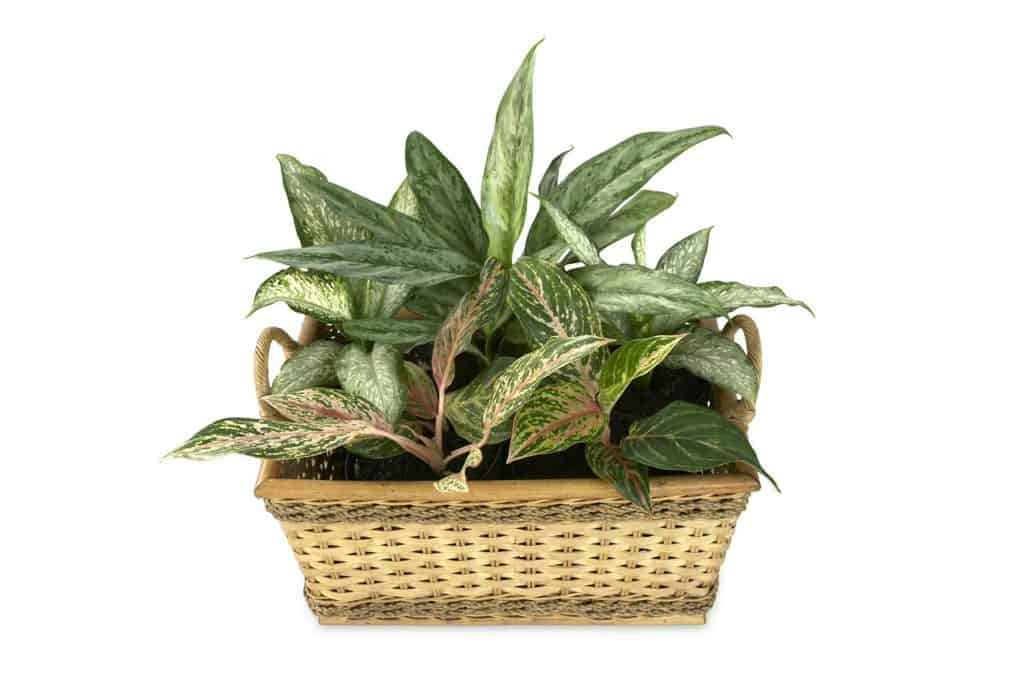
Dieffenbachia, commonly called the Dumb Cane plant, is a genus of tropical flowering plants in the family Araceae, native to the rainforests of tropical America, from Mexico down through South America.
It thrives in the warm, humid understorey of the jungle floor, which explains exactly why it makes such a superb low-light houseplant.
There are around 50 recognised species, with popular cultivars including Dieffenbachia seguine, Dieffenbachia maculata (Spotted Dumb Cane), and the widely available Dieffenbachia ‘Camille‘, known for its creamy white centres and dark green margins.
Why Is It Called Dumb Cane?
The common name ‘Dumb Cane’ comes from the plant’s toxic calcium oxalate crystals, which, if the sap or leaves are chewed, cause immediate swelling of the tongue and throat, temporarily preventing speech (making a person ‘dumb’ in the old sense of the word).
This is not merely a legend: it is a well-documented physiological reaction and one you should take seriously if you have children or pets.
| TOXICITY WARNING: All parts of the Dieffenbachia plant are toxic to humans, cats, dogs, and other pets. Ingestion causes intense oral irritation, excessive drooling, swelling, and difficulty swallowing. Keep out of reach of children and animals at all times. Wear gloves when pruning or repotting. |
Quick-Reference Dieffenbachia Care Chart
Use this at-a-glance table to check the key care requirements before diving deeper into any specific issue.
| Care Factor | Recommendation |
| Light | Bright indirect light; near a north or east-facing window is ideal |
| Water | Every 7–10 days; check top 2 inches of soil before watering |
| Temperature | 65–80°F (18–27°C); never below 60°F (15°C) |
| Humidity | 60% or higher; mist regularly or use a pebble tray |
| Soil | Well-draining potting mix; perlite or orchid bark added helps |
| Fertiliser | Balanced liquid feed every 2 weeks, March to September only |
| Repotting | Every 1–2 years or when roots emerge from drainage holes |
| Toxicity | TOXIC to humans and pets, keep out of reach of children and animals |
Why Are My Dieffenbachia Leaves Curling? (8 Causes Explained)
Leaf curling is your plant’s way of telling you something is wrong.
The good news is that, once you identify the cause, Dieffenbachia is remarkably resilient and will usually bounce back quickly with the right corrective action.
Below is a full diagnostic table followed by detailed explanations of each cause.
| Cause | Symptoms | Fix |
| Spider Mites / Pests | Curling, webbing, sticky residue | Neem oil spray; isolate plant immediately |
| Underwatering | Downward curl, dry/brittle leaves | Water thoroughly at base; check soil weekly |
| Overwatering | Yellowing + curling, soft stems | Allow soil to dry; improve drainage |
| Cold Temperatures | Drooping without yellowing | Move away from draughts and cold windows |
| Too Much Direct Sun | Bleached patches + curl | Relocate to bright indirect light |
| Over-Fertilisation | Brown tips + curling | Flush soil; skip fertilising for 4–6 weeks |
| Salt Build-Up | Crusty soil surface + curling | Deep-water the pot to flush salts |
| Low Humidity | Curling inward, crispy edges | Mist daily or use a humidifier nearby |
1. Spider Mites and Other Pests
Spider mites are the single most common cause of Dieffenbachia leaf curling.
These tiny arachnids, barely visible to the naked eye, colonise the undersides of leaves and feed by piercing the leaf tissue and sucking out the contents.
The damage manifests as fine stippling, a bronzed or silvery sheen, and eventually curling and distortion of the leaves. Look for fine webbing between leaves and along stems as a tell-tale sign.
| Expert Tip: Hold a piece of white paper under the leaves and tap. If you see tiny moving specks, you have spider mites. Early detection is key, treat immediately with neem oil or insecticidal soap. |
Other pests to watch for include:
- Mealybugs – white, cottony masses in leaf axils and joints
- Scale insects – brown, waxy bumps on stems and leaf undersides
- Fungus gnats – larvae can damage roots if soil stays too wet
- Aphids – small green or black insects clustering on new growth
2. Underwatering
When a Dieffenbachia is consistently underwatered, it begins to roll its leaves inward to reduce the surface area exposed to the air, a defensive mechanism to slow water loss through transpiration.
The leaves will feel dry and papery, and the soil will be bone-dry even 2-3 inches down. Stems may begin to droop or lean.
| Fix: Water thoroughly at the base of the plant until water runs freely from the drainage holes. Then allow the top 2 inches of soil to dry before watering again. |
3. Overwatering
Overwatering is arguably the most common mistake with indoor plants, including Dieffenbachia.
When roots sit in waterlogged soil, oxygen is cut off and root rot sets in, a fungal condition that destroys the roots’ ability to absorb water and nutrients.
Ironically, this can cause leaves to curl as if the plant is thirsty, even when the soil is wet, because the damaged roots cannot function.
Signs of overwatering include: yellowing lower leaves, soft mushy stems near the base, a sour or earthy smell from the soil, and leaves that are both curling and yellowing simultaneously.
| Fix: Allow the soil to dry significantly. Check roots, remove any black, mushy roots with sterile scissors. Repot into fresh, well-draining compost if rot is severe. |
4. Cold Temperatures or Cold Draughts
Dieffenbachia is a tropical plant with no tolerance for cold. Temperatures below 15°C (60°F) will cause the leaves to droop and curl.
Cold draughts from open windows, air-conditioning units, or being placed near an exterior wall in winter are common culprits.
Unlike other causes, cold-stressed leaves typically droop rather than turning yellow, they just look limp and sad.
| Fix: Move your plant away from windows and doors in autumn and winter. Keep it in a consistently warm room, ideally between 18-27°C (65-80°F). |
5. Excessive Direct Sunlight
In its natural habitat, Dieffenbachia grows under a dense rainforest canopy, receiving dappled, filtered light.
Direct sun, especially through south or west-facing windows in summer, can scorch the leaves, bleach them, and cause curling. Affected leaves often show pale or white patches alongside the curling.
| Fix: Move to a spot with bright, indirect light. A north or east-facing windowsill, or a few feet back from a south-facing window, is ideal. Sheer curtains can help filter harsh afternoon sun. |
6. Over-Fertilisation
Dieffenbachia only needs feeding from March to September (the active growing season), roughly every two weeks with a diluted balanced liquid fertiliser.
Over-fertilising, especially in winter when the plant is dormant, causes a build-up of salts and nitrogen in the soil that chemically burns the roots and causes the tips and edges of leaves to brown, followed by curling.
| Fix: Flush the soil by watering deeply several times to push out excess salts. Resume feeding at half the recommended dose, and never fertilise in winter. |
7. Salt Accumulation in the Soil
Over time, even with correct fertilising, mineral salts from tap water and fertiliser can accumulate in the potting mix, creating a hostile environment for roots.
You may notice a white, crusty deposit on the soil surface or on the outside of terracotta pots.
This salt build-up draws moisture away from the roots (osmosis) and can cause leaf curling even when you’re doing everything else right.
| Fix: Flush the pot thoroughly by watering with 2-3 times the pot’s volume of water, allowing it to drain fully. In the UK, where tap water tends to be hard in many areas, consider using collected rainwater for your houseplants. |
8. Low Humidity
As a tropical plant, Dieffenbachia prefers humidity levels of 60% or above.
The average UK home in winter, with central heating running, can drop to 30–40% humidity, causing the leaf edges to dry out and the leaves to curl inward.
This is especially common in homes with underfloor heating or near radiators.
| Fix: Group plants together to create a microclimate, place the pot on a tray of wet pebbles, mist the leaves regularly with room-temperature water, or invest in a small humidifier, an excellent investment for any houseplant collection. |
How to Fix Curling Dieffenbachia Leaves – Step-by-Step
Once you have identified the cause from the section above, follow this action plan:
- Inspect the undersides of leaves for pests. Use a magnifying glass if possible. Treat immediately with neem oil if pests are found.
- Check the soil moisture. Push your finger 2-3 inches into the compost. Dry = underwater; soggy = overwatered.
- Review the plant’s location. Is it near a draught, radiator, or in direct sun? Move if necessary.
- Check the temperature. Use a digital thermometer to confirm the room stays above 18°C at night.
- Assess your fertilising history. Have you been feeding it in winter? Have you been using full-strength fertiliser? Flush and adjust.
- Increase humidity. Mist the plant, use a pebble tray, or move it to the bathroom (as long as there is adequate light).
- Be patient. Dieffenbachia is resilient. Once conditions improve, new leaves will emerge healthy within 2–4 weeks.
Watering Your Dieffenbachia Correctly
Water is the most critical variable in Dieffenbachia care, and getting it wrong, in either direction, is the leading cause of leaf curling, yellowing, and plant death.
Here is a detailed guide to watering your plant correctly.
How Often to Water
There is no universal answer, it depends on pot size, season, temperature, humidity, and soil type. As a general guide:
- Spring and Summer (growing season): Approximately every 7–10 days
- Autumn and Winter (dormant season): Approximately every 14–21 days
Always check the soil rather than following a rigid schedule. The top 2 inches of compost should be dry before you water again.
How to Water Correctly
- Water slowly at the base of the plant, not over the leaves. Wet foliage can encourage fungal disease.
- Use lukewarm or room-temperature water, cold tap water can shock tropical plants, especially in winter.
- Water until it flows freely from the drainage holes at the bottom of the pot.
- Empty the saucer after 30 minutes. Never allow the pot to sit in standing water.
- Use rainwater where possible, especially in hard-water areas. The calcium and chlorine in mains water can contribute to salt build-up and crispy leaf tips.
| The single best tool for a houseplant owner: a moisture meter. A basic digital soil moisture meter costs around £10-£15 and removes all guesswork from watering decisions. |
Light Requirements for Dieffenbachia
Getting the light right is essential for keeping your Dieffenbachia healthy and preventing leaf problems.
- Best light: Bright, indirect light (filtered through a sheer curtain, or away from a south-facing window)
- Tolerates: Low to medium indirect light, this is one of its greatest strengths as a houseplant
- Avoid: Direct sunlight, which causes bleaching, scorching, and leaf curl
- Avoid: Deep shade, very low light causes slow growth, pale leaves, and reduced variegation
In the UK, a north or east-facing windowsill is often ideal. In south or west-facing rooms, position the plant a metre or two back from the window, or use sheer curtains.
LED grow lights work well in darker rooms – a 15-20W full-spectrum LED on a timer set for 12-14 hours per day is sufficient.
Seasonal Light Adjustments
In the UK, winter light levels drop dramatically, especially in the north of England and Scotland.
You may need to move your Dieffenbachia closer to a window between October and February, or supplement with a grow light.
Reduced light in winter naturally slows growth, so reduce watering and stop fertilising during this period.
Temperature & Humidity
Temperature
Dieffenbachia thrives in the temperature range typical of a warm home, which is one reason it is such a popular houseplant in the UK.
- Ideal range: 18–27°C (65–80°F)
- Minimum: 15°C (60°F) – below this, growth stops and damage occurs
- Avoid: Frost, cold draughts, and placement near air-conditioning vents
Humidity
Aim for 60% relative humidity or above. Practical ways to increase humidity in a UK home:
- Pebble tray: Fill a saucer with pebbles and water, place the pot on top (ensure the pot base does not touch the water).
- Plant grouping: Grouping plants together raises local humidity as they transpire.
- Regular misting: Use a fine mister with room-temperature water, focusing on the undersides of leaves as well as the tops.
- Humidifier: A cool-mist humidifier near your plant collection is the most effective solution, particularly in winter.
- Bathroom placement: If your bathroom has adequate light, the naturally higher humidity makes it an ideal room for tropical plants.
Soil & Fertilising
Best Soil for Dieffenbachia
Dieffenbachia is not particularly fussy about soil, but it performs best in a well-draining, moisture-retentive mix. A good recipe is:
- 2 parts peat-free houseplant compost or coir
- 1 part perlite (for drainage and aeration)
- 1 part orchid bark (optional, but adds excellent drainage)
Avoid heavy, clay-based garden soils, these retain too much water and suffocate the roots.
Ensure any pot you use has at least one drainage hole. Terracotta pots are excellent for Dieffenbachia as they allow the soil to breathe and dry evenly.
Fertilising
Fertilise your Dieffenbachia once every two weeks from March through to September, using a balanced liquid houseplant fertiliser (such as a 20-20-20 NPK formulation) diluted to half the manufacturer’s recommended strength.
This is especially important during the active growing season when the plant is putting on new leaves.
| 📅 Fertilising Calendar: March–September = Feed every 2 weeks at half strength. October-February = No feeding. The plant is dormant and cannot use the nutrients, leading to salt build-up. |
Signs of over-fertilisation: brown leaf tips, white crusty deposits on soil, leaf curl. Signs of under-fertilisation: pale leaves, very slow growth, loss of leaf variegation.
Repotting
Repot every 1–2 years, or when you see roots emerging from the drainage holes or circling the bottom of the pot.
Choose a pot only 1–2 inches larger in diameter than the current one, too large a pot holds excess moisture and increases overwatering risk. Spring is the best time to repot, when the plant is entering its active growth phase.
How to Prune Dieffenbachia
Regular pruning keeps your Dieffenbachia looking its best, encourages bushier growth, and removes unhealthy leaves. It is also an opportunity to take cuttings for propagation.
What You Need
- Sharp, sterile pruning scissors or a knife (wipe with isopropyl alcohol between cuts)
- Protective gloves – the sap is toxic and can irritate skin and eyes
- A damp cloth to wipe away any sap drips
How to Prune
- Always wear gloves before handling the plant.
- Remove any yellowed, brown, or damaged leaves by cutting the stem at a 45-degree angle close to the main stem.
- To control height, cut the main stem at the desired height. New growth will emerge from just below the cut.
- To encourage a bushier plant, cut the growing tip (apical meristem), this redirects energy into side shoots.
- Dispose of pruned material carefully, do not add it to a compost heap accessible to children or pets.
- Wash your hands and sterilise all tools thoroughly after pruning.
Propagation from Cuttings
Pruned stems do not need to go to waste, Dieffenbachia is easy to propagate:
- Stem cuttings: Cut a section of stem 10–15 cm long with at least one node. Place in water or moist compost. Roots should emerge within 3–4 weeks in warm conditions.
- Top cutting: Root the leafy top cutting directly in moist compost or water.
- Cane sections: Lay bare stem sections horizontally in moist compost, each node can produce a new plant.
| ⚠ SAFETY REMINDER: The sap of Dieffenbachia causes skin irritation and is highly toxic if ingested. Always wear gloves when pruning or taking cuttings, keep cuttings away from children and pets, and wash hands thoroughly afterwards. |
Other Common Dieffenbachia Problems
Yellow Leaves
Yellowing leaves are very common and can have several causes.
The most frequent are overwatering and root rot (lower leaves turn yellow first), natural ageing (the oldest, lowest leaves will yellow and drop over time, this is normal), excessive direct sun (leaves bleach and yellow), or nutrient deficiency (generally pale yellow across the whole leaf, not patchy).
| Fix: Assess the watering, light, and fertilising situation. If yellowing is limited to the bottom 1–2 leaves, it is likely natural ageing. If it is spreading upwards rapidly, investigate overwatering and root rot. |
Brown Leaf Tips
Brown tips are almost always caused by low humidity, inconsistent watering, or fluoride/salt in tap water.
They can also result from physical damage or cold draught exposure. Once tips go brown, the damage is cosmetic and permanent, you can trim them with scissors to improve appearance, but address the underlying cause to prevent more.
| Fix: Increase humidity, switch to rainwater or filtered water, and ensure watering is consistent. |
Slow or Stunted Growth
Slow growth during spring and summer (when conditions are right) usually means insufficient light.
In winter, slow growth is completely normal and expected, Dieffenbachia is semi-dormant during this period and should not be fed or excessively watered.
Mealybugs (White Cottony Masses)
Mealybugs are sap-sucking insects that hide in the joints and undersides of leaves. They look like tiny pieces of white cotton wool.
Left untreated, they weaken the plant significantly and can spread to other houseplants.
| Fix: Dab individual bugs with a cotton bud soaked in 70% isopropyl alcohol. For larger infestations, spray the whole plant with a diluted neem oil solution or insecticidal soap spray, repeating every 7–10 days for 3–4 weeks. Isolate the plant from others immediately. |
Root Rot
Root rot is caused by the Pythium, Phytophthora, or Rhizoctonia fungi, which thrive in waterlogged, poorly aerated soil.
Symptoms include mushy, dark brown or black roots, a foul smell from the soil, and a plant that wilts even when the soil is wet.
| Fix: Remove the plant from its pot, cut away all affected roots with sterile scissors, dust the remaining roots with cinnamon (a natural antifungal), and repot into fresh, dry compost. Do not water for 48–72 hours after repotting. |
How to Encourage Your Dieffenbachia to Bloom
Dieffenbachia does flower, producing a typical aroid inflorescence, a pale green or white spathe surrounding a spadix, similar to a Peace Lily or Anthurium.
However, flowering is rare indoors and is not the plant’s main attraction; its beautiful foliage is. If you do want to encourage flowering:
- Provide consistent, bright indirect light throughout the year
- Maintain temperatures above 21°C (70°F) consistently
- Ensure humidity stays above 60%
- Feed regularly during the growing season with a balanced fertiliser
- Repot regularly so the plant is not root-bound
Note: Indoor Dieffenbachia plants rarely bloom, and if they do, the flowers are insignificant compared to the foliage.
Many experienced growers remove the flower spike to redirect the plant’s energy into producing lush new leaves.
Recommended YouTube Resources
The following YouTube resources offer excellent visual guidance for Dieffenbachia care and troubleshooting.
These are highly-rated educational channels run by experienced plant growers:
Frequently Asked Questions
How often should I water my Dieffenbachia?
Every 7-10 days in spring and summer, and every 14–21 days in autumn and winter. Always check the top 2 inches of soil first. water only when it feels dry.
Can Dieffenbachia survive in a bathroom with no natural light?
Briefly, but not long-term. Dieffenbachia needs some natural light to photosynthesize.
A bathroom with a frosted window is fine; a completely windowless bathroom will cause the plant to decline within months. Supplement with a grow light if needed.
Is Dieffenbachia safe for cats and dogs?
No. Dieffenbachia is toxic to cats, dogs, and other pets. If your pet chews on the plant, they will experience oral irritation, drooling, pawing at the mouth, and possibly vomiting.
Contact your vet immediately if you suspect your pet has eaten any part of the plant.
Why does my Dieffenbachia have brown tips but green leaves?
Brown tips are almost always a humidity or watering issue, either too low humidity, inconsistent watering, or fluoride/salt in tap water.
The leaf body is green because the plant is otherwise healthy. Trim the brown tips cosmetically and address the cause.
Can I put my Dieffenbachia outside in summer?
Yes, in the UK during the warmer months (June–August), you can place Dieffenbachia outside in a shaded, sheltered spot.
It must never be in direct sun outdoors and must be brought back inside before temperatures drop below 15°C. Always check for pests before bringing it back indoors.
My Dieffenbachia is leaning, what should I do?
Leaning is almost always a response to uneven light, the plant grows toward its light source. Rotate the pot a quarter turn every week or two for even, upright growth.
If the stem is genuinely too heavy, use a bamboo cane and soft plant tie for support.
How do I know if my Dieffenbachia needs repotting?
Key signs: roots growing out of drainage holes, the plant drying out very quickly after watering, visible root circling at the soil surface, or the plant becoming top-heavy and unstable.
Repot in spring into a pot 5 cm larger in diameter.
Final Thoughts
Dieffenbachia is one of the most rewarding and forgiving houseplants you can grow.
Its lush, dramatic foliage can transform a room, and with the right knowledge, it is genuinely one of the easier tropical plants to keep thriving in a UK home.
The key takeaways from this guide:
- Curling leaves are almost always caused by one of eight fixable issues, use the diagnostic table to identify yours.
- Water correctly: check the soil, not the calendar.
- Bright indirect light and consistent warmth are the foundation of good Dieffenbachia health.
- Humidity matters more than most people realise, invest in a humidifier or use pebble trays.
- Never overlook the toxicity warning this plant is dangerous to children and pets.
With the right care, your Dieffenbachia will reward you with year-round lush growth, stunning variegated foliage, and an enduring presence that will make it one of the most admired plants in your home.
Hi, I'm Matt,
An amateur gardener with a houseplant habit that got slightly out of hand.
I started Bean Growing to share what I've learned from a few years of trial, error, and the occasional dead plant.
I grow a mix of houseplants and outdoor shrubs in the UK but try to expand my knowledge to the US. I try to write about what actually works