
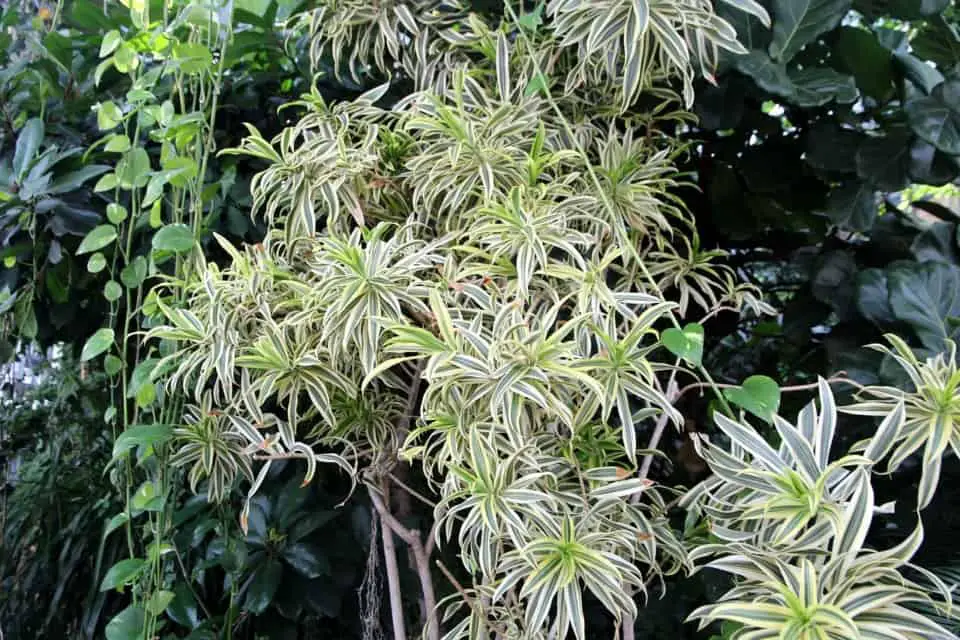
Spider plants (Chlorophytum comosum) are among the most forgiving and rewarding houseplants you can grow.
As a plant parent who has kept spider plants in every corner of the home, from a bright south-facing conservatory to a dim bathroom shelf, I can confirm that few houseplants are as adaptable when it comes to light.
Adaptable does not mean needs nothing, however.
Light is one of the most important factors in keeping a spider plant healthy, vibrant, and producing those gorgeous trailing offshoots known as spiderettes.
Get it wrong in either direction and your plant will let you know through its leaves.
In this complete guide to spider plant light requirements, you will learn exactly how much light a spider plant needs, the best indoor and outdoor placement, how to recognise signs of too much or too little light, how to use artificial lighting, and how to adjust your care through the seasons.
By the end, you will have everything you need to keep your spider plant thriving all year long.
What Is a Spider Plant? (And Why Is It So Popular?)
The spider plant, known botanically as Chlorophytum comosum, is a perennial herb native to tropical and southern Africa.
It takes its common name from the long, arching plantlets it produces on trailing stems, which dangle like spiders suspended from a web.
In other parts of the world it goes by the names airplane plant, ribbon plant, and hen and chickens plant, a sense of just how widely it has spread around the globe.
Spider plants are prized for far more than their looks.
NASA’s famous Clean Air Study found them effective at filtering common household pollutants including formaldehyde, xylene, and carbon monoxide from indoor air.
They are also officially classified as non-toxic to humans, cats, and dogs by the ASPCA, though ingesting large quantities may cause mild digestive upset.
This combination of beauty, hardiness, air-purifying properties, and pet safety has made the spider plant one of the most popular houseplants in the world for over a century.
Common Spider Plant Varieties
There are several cultivated varieties, and knowing which one you have matters, the more variegated your plant, the more light it will need to maintain its colour.
Chlorophytum comosum ‘Vittatum’: The most widely grown variety. Green leaves with a central white or cream stripe. Moderate variegation; very adaptable to different light levels.
Chlorophytum comosum ‘Variegatum’: White or cream leaf edges with a solid green centre. Slightly more light-hungry than ‘Vittatum’ to maintain its crisp white margins.
Chlorophytum comosum ‘Bonnie’: A curly-leafed, more compact variety with the same light requirements as the standard spider plant.
Chlorophytum comosum ‘Reverse Variegatum’ (Hawaiian): Yellow or cream leaf edges with a green centre. The most light-sensitive of the common varieties due to its reduced green tissue.
Why Light Matters So Much for Spider Plants
Light is the engine that powers photosynthesis, the process by which your spider plant converts light energy and carbon dioxide into the sugars it needs to grow, produce new leaves, and generate those signature plantlets.
Without adequate light, this process slows dramatically and the effects show up quickly across the plant.
The white or yellow variegation on spider plant leaves is directly connected to light availability.
Variegated cells contain reduced or absent chlorophyll, the green pigment responsible for capturing light energy.
This means a variegated spider plant relies entirely on its green leaf sections to photosynthesise.
When light levels drop too low, the plant responds by producing more green, chlorophyll-rich tissue, causing the white or yellow stripes to fade and eventually disappear.
Getting light right is not just about growth rate, it directly affects the appearance, variegation, energy levels, and long-term health of your plant.
It is one of the most important decisions you will make as a spider plant owner.
How Much Light Does a Spider Plant Need?
Spider plants thrive in bright, indirect light, this is the single most important takeaway from this entire guide.
The ideal scenario is 6 to 8 hours of bright indirect light per day.
In practice, this means placing your plant near a window where it receives strong ambient light and possibly some gentle direct sun in the very early morning, but remains shielded from harsh midday and afternoon rays.
In terms of light intensity, spider plants do best in the range of 10,000 to 20,000 lux.
To put that in context: direct outdoor sunlight delivers approximately 100,000 lux, a typical well-lit indoor room provides around 500 to 1,000 lux, and a bright window in indirect light typically delivers 10,000 to 25,000 lux.
That bright window zone is exactly where spider plants are happiest.
Spider plants genuinely tolerate a range of conditions, from relatively low light all the way up to bright indirect light, and this is what makes them popular for so many rooms and situations.
That said, ‘tolerates’ and ‘thrives’ are very different things.
The more light you can provide within their preferred range, the healthier and more vibrant your plant will be.
The Best Light Conditions for a Spider Plant
Bright Indirect Light (Ideal)
Bright indirect light is the gold standard for spider plants.
An east-facing window is the single best position in most homes, providing several hours of gentle morning sun that warms the plant without scorching the leaves.
A north-facing window in the northern hemisphere also works very well, offering consistent indirect light throughout the day with no direct sun exposure.
South-Facing Windows
South-facing windows in the northern hemisphere receive the most intense direct sunlight throughout the day and are generally too bright for spider plants unless the plant is positioned a good distance back from the glass, or a sheer curtain is used to diffuse the light.
In the UK, south-facing windows in winter are actually quite good for spider plants, as the lower sun angle means less intensity.
In summer, add a sheer curtain or move the plant a metre or two back from the glass.
West-Facing Windows
West-facing windows deliver afternoon sun, which tends to be harsher and warmer than morning sun.
Spider plants can manage well here, but watch carefully for leaf scorch during summer months when the afternoon sun is at its strongest.
North-Facing Windows
North-facing windows in the northern hemisphere offer the gentlest and most consistent light.
Spider plants will survive here, though growth may be noticeably slower and variegation may fade over time compared to a brighter position.
For low-light north-facing rooms, the solid green varieties tend to perform better than heavily variegated ones.
Spider Plant Light Requirements at a Glance
| Light Condition | Plant Response | Variegation | Growth Rate | Recommended? |
| Bright indirect (ideal) | Lush, perky leaves; plantlets produced | Vivid and stable | Fast | ✅ Yes, ideal |
| Low light (survives) | Slower growth, drooping possible | Fades to green | Slow | ⚠️ Acceptable |
| Direct morning sun | Tolerates well short-term | Maintained | Moderate | ✅ Fine in moderation |
| Harsh direct sun | Leaf scorch, browning, wilting | Bleaches out | Halted | ❌ Avoid |
| Artificial grow light | Good growth possible | Maintained | Moderate | ✅ Yes if 12–16 hrs/day |
Best Indoor Placement for Your Spider Plant
Knowing the right light is one thing, knowing exactly where in your home to place your spider plant is another.
Here is a room-by-room breakdown based on experience of keeping spider plants in different areas of the home.
Living Room
An east or north-facing window is ideal for living rooms.
If your living room receives afternoon sun, position the plant at least two metres back from the glass or add a sheer curtain.
Hanging baskets are especially effective in living rooms as they take advantage of ambient light that bounces from walls and ceilings, and they show off the trailing plantlets beautifully.
Bedroom
Spider plants are an excellent choice for bedrooms.
Unlike many other plants, spider plants continue photosynthesising at reduced rates through the night, releasing oxygen steadily.
A north or east-facing windowsill is ideal.
The slightly lower light levels typical of most bedrooms suit spider plants well and they will not demand the attention that high-maintenance plants do.
Bathroom
Bathrooms with a window can be surprisingly good for spider plants.
The naturally higher humidity levels replicate the tropical conditions the plant evolved in, and diffused light through frosted or obscured glass creates a perfect indirect light environment.
Position the plant as close to the window as possible to make the most of available light.
Kitchen
Spider plants look wonderful on kitchen windowsills, particularly east-facing ones that receive morning light.
Avoid positioning directly above the hob or oven, where heat and steam can stress the leaves and dry out the soil rapidly.
Home Office
Spider plants are among the best plants for home office environments.
They tolerate the lower light levels common in most offices, are proven air purifiers, useful if you spend long hours at a desk, and are low-maintenance enough not to distract from work.
Hallways and Shaded Areas
Spider plants are genuinely one of very few houseplants that will survive in hallways and other lower-light areas of the home.
Growth will be slow and variegation will fade, so consider rotating the plant with a better-lit spot for two to four weeks every couple of months to allow it to recover and build up its energy reserves.
| 💡 Hanging Basket Pro Tip Spider plants are ideal for hanging baskets near windows. Hanging them allows the plant to absorb ambient and reflected light from multiple angles, encourages the trailing plantlets to cascade naturally, and keeps the leaves out of reach of pets and small children. Rotate the basket by a quarter turn every week or two to ensure all sides receive even light exposure and the plant grows symmetrically. |
Outdoor Spider Plant Placement
In the UK and similar temperate climates, spider plants can be placed outdoors from late spring through to early autumn when night temperatures remain consistently above 10 degrees Celsius.
Outdoors, the rules shift slightly because UV intensity and heat are significantly greater than anything the plant experiences through glass indoors.
Spider plants grown outdoors prefer dappled shade or partial shade.
A position under the canopy of a large deciduous tree is a classic and effective spot, as the leaves naturally filter the sunlight.
A north or east-facing wall or fence provides similar protection from the harshest sun.
Avoid placing outdoor spider plants in full sun, particularly during the hottest part of the day between 11am and 3pm.
Summer sun in the UK, while less intense than in many other countries, is still strong enough to scorch spider plant leaves.
| ⚠️ Important: Frost Warning for UK Gardeners Bring your spider plant back indoors before the first autumn frost. Spider plants are frost-tender and will not survive temperatures below approximately 5°C (41°F). In the UK, this typically means bringing them inside by mid-October at the latest. |
Signs Your Spider Plant Is Getting Too Much Light
Your spider plant’s leaves are remarkably expressive and will give you clear signals if something is wrong.
Here are the signs that your plant is receiving too much direct or intense sunlight.
Brown leaf tips and edges: Usually the first visible sign of light stress. The tips of the leaves begin to turn brown and crispy, then spread inward along the leaf margins if the issue is not corrected.
Faded or bleached leaves: The vibrant green begins to wash out, taking on a pale quality. The white variegation may also become less defined as the contrast is lost.
Dry, crispy texture: Leaves exposed to too much direct sun develop a dry, papery texture, particularly at the tips and along the edges.
Leaf curling or wilting: The leaves curl inward or begin to droop as the plant tries to reduce its surface area and limit water loss through the leaf tissue.
Yellowing of new growth: Young leaves emerging from the centre may be abnormally pale or yellow, particularly when the plant is under combined heat and light stress.
If you notice any of these signs, move your plant to a shadier position immediately and check that it is receiving adequate water, as intense light and heat significantly increase the plant’s water requirements.
Signs Your Spider Plant Is Getting Too Little Light
Insufficient light is equally damaging, if somewhat slower to show itself.
Here is what to look for if you suspect your spider plant is not getting enough light.
Yellowing leaves: When a spider plant does not receive enough light, the leaves gradually lose their colour and turn yellow as the plant slows its growth and reduces chlorophyll production.
Loss of variegation: One of the most telling signs of insufficient light. The white or yellow stripes on variegated varieties begin to fade and the plant starts producing entirely green leaves, compensating by maximising chlorophyll production.
Slow or no growth: A spider plant in insufficient light will produce few new leaves and is very unlikely to produce plantlets. If your plant has not put out new growth in several weeks during the growing season, poor light is the most likely cause.
Leggy, stretched growth: The plant may produce long, thin, weak-looking leaves that lean noticeably toward the nearest light source. This is called etiolation, the plant physically stretching itself toward available light.
Drooping leaves: Leaves hang down limply rather than arching outward in the characteristic, perky way a healthy spider plant holds its foliage.
If you notice these signs, move your plant closer to a natural light source. If your home genuinely does not have a suitable bright spot, consider supplementing with an artificial grow light.
Can Spider Plants Grow Under Artificial or LED Light?
Yes, spider plants can grow successfully under artificial lighting, including LED grow lights.
This makes them an excellent choice for offices, rooms without suitable windows, or for gardeners wanting to maintain plants through the darker winter months in the UK.
Choosing the Right Grow Light
For the best results under artificial light, use a full-spectrum LED grow light that mimics the spectrum of natural sunlight.
Look for lights that cover both the blue spectrum (around 400 to 500 nanometres, which supports leafy growth and compact form) and the red spectrum (around 600 to 700 nanometres, which supports overall development and metabolic activity).
How to Position a Grow Light
Position the grow light approximately 15 to 30 centimetres (6 to 12 inches) above your spider plant.
Run it for 12 to 16 hours per day to replicate the light duration and intensity of a bright indirect natural light environment.
Using a plug-in timer makes this effortless and ensures consistent light cycles.
What to Expect Under Artificial Light
Spider plants grown under LED grow lights will survive and maintain reasonable health.
However, they may not grow quite as vigorously or produce as many plantlets as those grown in bright natural indirect light.
For the best results, use artificial lighting to supplement natural light rather than as a complete replacement.
A combination of a partially lit window position plus a grow light running for 4 to 6 hours daily is often more effective than a grow light alone.
Can Spider Plants Live in Low Light?
Spider plants can survive in low light conditions, though they will not thrive in the way they would in a brighter environment.
If your only available option is a north-facing room or a poorly lit corner, a spider plant is one of your best choices because it will cope better than the vast majority of other houseplants.
In low light conditions, you should expect the following changes in your spider plant’s behaviour:
- Growth will slow considerably, with fewer new leaves produced per month.
- Plantlet (spiderette) production will reduce significantly or stop altogether.
- Variegation will fade over time as the plant produces more chlorophyll-rich green tissue.
- Leaves will be thinner and may not arch as prominently as they do in brighter conditions.
If you have a spider plant in a low-light position, move it to a brighter spot for two to four weeks every couple of months to allow it to recover its energy reserves.
Rotating plants between lower and brighter spots is a simple and effective way to maintain plants in areas that would otherwise be too dark for them to survive long term.
Do Spider Plants Need Direct Sunlight?
No, spider plants do not need direct sunlight and should generally be kept out of harsh, prolonged direct sun.
While they can tolerate short periods of direct morning sun (as received from an east-facing window in the early hours), prolonged exposure to direct sunlight causes significant leaf damage.
The delicate leaf tissue of spider plants is susceptible to sunscald, which appears as brown, bleached, or dry patches on the leaves.
Once a leaf has been scorched, the damage is permanent, that leaf will not recover its original appearance.
You can trim damaged leaves back to tidy the plant’s look, but prevention is always preferable to repair.
In the UK, the sun’s intensity is lower than in many other parts of the world, which means spider plants on a south-facing windowsill may tolerate the conditions better in winter than they would in a warmer climate.
During British summers, however, south-facing windows can still deliver enough intensity to cause leaf scorch.
A sheer curtain or a position a metre or two back from the glass is advisable during the summer months.
Seasonal Light Adjustments for UK Plant Parents
Light levels in the UK change dramatically between summer and winter, and your spider plant’s care needs change with the seasons.
Adapting your approach throughout the year is one of the most impactful things you can do for your plant’s long-term health.
Spring (March to May)
Days lengthen rapidly and light levels increase quickly.
This is when your spider plant will wake up from its slower winter period and begin actively growing again.
Move the plant to its best indirect light position and resume a regular feeding schedule.
Watch for any sudden leaf bleaching if the spring sun is stronger than expected.
Summer (June to August)
Natural light is plentiful and days are long, this is the plant’s most active growing period.
You will see the most new leaf production and plantlet generation during these months.
Ensure the plant is in bright indirect light and shielded from harsh direct midday sun.
Water more frequently as the plant’s energy demands are higher and the soil dries out faster.
Feed monthly with a balanced liquid fertiliser.
Autumn (September to November)
Days shorten and light levels begin to drop.
Move your plant progressively closer to its light source to compensate for the reduced duration and intensity of natural light.
Begin reducing feeding as growth naturally slows.
If you have outdoor spider plants, bring them inside before the first frost.
Winter (December to February)
This is the most challenging season for indoor plants in the UK.
Natural light can be genuinely scarce, particularly in north-facing rooms.
Move your spider plant to your brightest available spot, or supplement with a grow light during the darkest months.
Reduce watering as the plant’s metabolism slows in response to lower light and cooler temperatures.
Do not feed during winter.
The Connection Between Light and Watering
Light and watering are more closely connected than many plant owners realise, and getting one wrong while getting the other right will still cause problems.
A spider plant in bright light photosynthesises actively, grows faster, and uses water more quickly, this plant will typically need watering every 7 to 10 days in summer.
A spider plant in low light has a much slower metabolism and uses water far more slowly.
Watering it on the same schedule as a plant in bright light is one of the most common causes of root rot.
As a general rule, always let the top 2 to 3 centimetres of soil dry out between waterings.
Adjust the frequency based on the light your plant is receiving: more light means more frequent watering, less light means less frequent watering.
| 💧 Watering Tip Spider plants are sensitive to the fluoride often found in tap water. If you notice persistent brown leaf tips that are not explained by light issues, try switching to filtered water or leaving tap water to stand uncovered overnight before watering. Rainwater is also an excellent option for UK gardeners. |
Spider Plant Light Requirements: Frequently Asked Questions
What is the ideal light for a spider plant?
The ideal light for a spider plant is bright, indirect light for 6 to 8 hours per day.
An east or north-facing window in the northern hemisphere is the best position in most UK homes.
Can spider plants survive in a room with no windows?
Spider plants are unlikely to survive long-term in a room with no natural light at all.
However, they can grow reasonably well under a full-spectrum LED grow light run for 12 to 16 hours per day, which effectively replicates the duration and spectrum of natural indirect light.
Why are the white stripes fading on my spider plant?
Fading variegation is almost always a sign of insufficient light. The plant compensates for reduced light by producing more green, chlorophyll-rich tissue.
Move your plant to a brighter position with good indirect light and the new leaves that emerge should show improved colour within a few weeks.
Why are my spider plant’s leaves turning brown at the tips?
Brown leaf tips can indicate several things: too much direct sunlight, inconsistent watering (particularly underwatering), low humidity, or fluoride sensitivity.
Spider plants are notably sensitive to the fluoride in tap water, so if you have ruled out light and watering issues, try switching to filtered water or rainwater.
How far from a window should my spider plant be?
For most UK homes, placing your spider plant within 1 to 2 metres of an east or north-facing window is ideal.
For south-facing windows in summer, move the plant 2 to 3 metres back from the glass, or add a sheer curtain to diffuse the direct sun.
Can spider plants grow in a bathroom with no window?
Without natural light or artificial supplementation, a spider plant will not survive long-term in a windowless bathroom.
However, if your bathroom has even a small frosted window, the diffused light combined with higher humidity can actually create surprisingly good conditions for a spider plant.
Do spider plants need more light to produce plantlets?
Yes. Spider plants produce their trailing spiderettes in response to maturity and good growing conditions, of which adequate light is one of the most important.
Plants kept in lower light conditions produce significantly fewer plantlets and may stop producing them altogether.
Moving your plant to a brighter position is one of the most effective ways to encourage plantlet production.
Are spider plants safe for cats?
Spider plants are classified as non-toxic to cats and dogs by the ASPCA. However, the plantlets are known to have a mild effect on cats that makes them attracted to chewing on the leaves.
Ingesting significant quantities may cause mild vomiting or digestive upset, so it is still worth keeping spider plants out of easy reach of pets that like to chew on plants.
How do I know if my spider plant is getting the right amount of light?
A spider plant receiving the right amount of light will have upright, arching leaves with vivid green colouration and clearly defined white or yellow variegation (if applicable).
It will put out new leaves regularly during the growing season, produce trailing stems with plantlets at maturity, and have a full, bushy appearance rather than a sparse or leggy one.
Can I put my spider plant outside in the UK summer?
Yes, spider plants can be placed outside in the UK from late spring to early autumn, but they should be in partial shade or dappled light rather than full sun.
Bring them back inside before the first autumn frost, typically by mid-October in most parts of the UK.
Recommended YouTube Search Terms for Visual Learners
If you prefer to see spider plant care in action, the following YouTube search terms will help you find high-quality video guides.
‘Spider plant care for beginners’: A great starting point covering the full care routine, light, watering, soil, and propagation, in one accessible video.
‘How much light does a spider plant need’: Surfaces several detailed videos on light positioning, window placement, and what to do in low-light homes.
‘Spider plant light requirements explained’: More technical content covering lux levels, grow light comparisons, and troubleshooting leaf problems caused by light issues.
‘How to propagate spider plants from spiderettes’: The essential next step once your well-lit, healthy spider plant starts producing plantlets. Look for both water and soil propagation methods.
‘Best grow lights for houseplants UK 2025’: Current reviews and comparisons of the most effective and affordable options available in the UK.
‘Spider plant problems and solutions’: A useful troubleshooting search covering brown tips, yellowing, loss of variegation, and wilting, with practical solutions for each.
Channels that consistently produce trustworthy, science-backed houseplant content include Harli G, Summer Rayne Oakes, and Darryl Cheng of House Plant Journal. All three have covered spider plants and light requirements in depth.
Final Thoughts
Spider plants are genuinely one of the best houseplants available, and a large part of what makes them so special is their ability to adapt to a wide range of light conditions.
However, adaptability should never be confused with needing nothing.
For a truly healthy, vibrant, plantlet-producing spider plant, bright indirect light for 6 to 8 hours per day is your target.
An east or north-facing window is the ideal position in most UK homes.
Shield the plant from harsh direct sun, adjust its position seasonally as light levels change throughout the year, and watch its leaves for signals, they will tell you clearly when the light is too much or too little.
Get the light right, keep a consistent watering routine that accounts for the season and light level, feed through the growing season, and your spider plant will reward you with lush, arching foliage, an abundance of trailing plantlets, and years of trouble-free growth.
Hi, I'm Matt,
An amateur gardener with a houseplant habit that got slightly out of hand.
I started Bean Growing to share what I've learned from a few years of trial, error, and the occasional dead plant.
I grow a mix of houseplants and outdoor shrubs in the UK but try to expand my knowledge to the US. I try to write about what actually works