
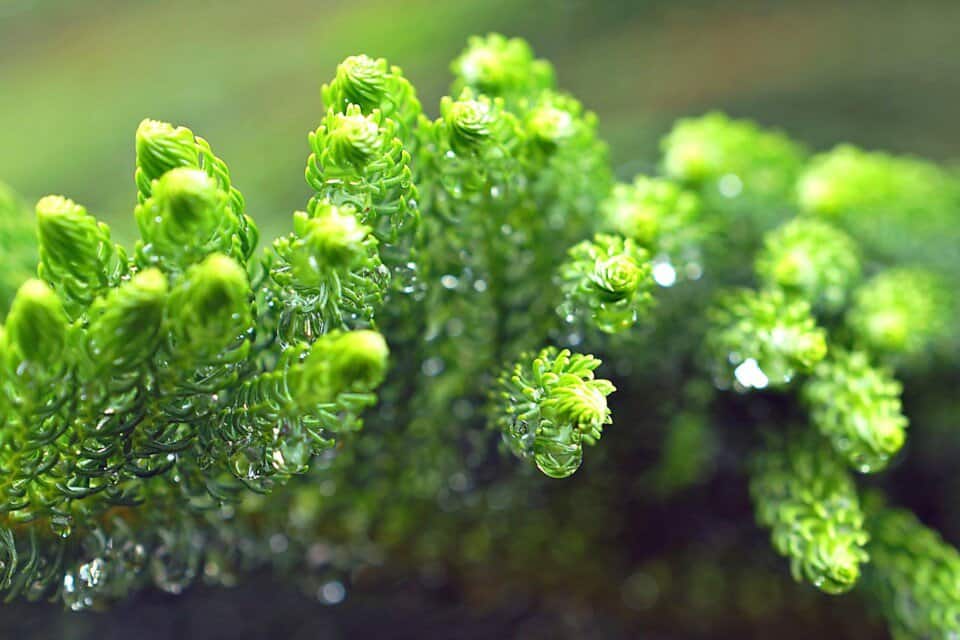
To propagate a Norfolk pine (Araucaria heterophylla), the most reliable method is seed propagation: soak fresh seeds for 24 hours, plant horizontally halfway into a light, well-draining mix, and maintain 70–75°F in bright indirect light. Seeds germinate in 2–6 weeks. Stem cuttings can root but only succeed when taken from the central top tip side branch cuttings will never grow upright.
Propagating a Norfolk pine is one of the most misunderstood topics in houseplant growing. Most guides treat it like any other conifer or tropical plant and that’s exactly where they go wrong.
Araucaria heterophylla is neither. Its biology is unique, and that biology determines which propagation methods actually work.
This guide covers every proven method, explains why each works or fails, and gives you the honest success rates that most articles skip over.
What Is a Norfolk Pine?
The Norfolk Island pine (Araucaria heterophylla) is a tropical evergreen conifer native to Norfolk Island in the South Pacific.
Despite its name and Christmas tree appearance, it is not a true pine it belongs to the ancient family Araucariaceae, which predates many modern tree families.
Outdoors in USDA zones 10–11, it can reach 200 feet. As a houseplant, it grows slowly and typically tops out at around 20 feet indoors given decades of care.
It is prized for its perfectly tiered, symmetrical branching a feature directly tied to how it grows from a single central leader.
This biological trait is the key to understanding why propagation is more nuanced than with most houseplants.
| Pet safety warning: Sources conflict on this plant’s toxicity. The ASPCA’s own database classifies Araucaria heterophylla as non-toxic to cats, dogs, and horses. However, other veterinary sources, including the ASPCA’s Animal Poison Control Center, have listed it as potentially causing vomiting and depression in cats and dogs if ingested. Until the science is settled, treat it with caution around pets keep it out of reach of animals that chew plants. If your pet ingests any part of the plant, contact your vet. |
Why Propagate a Norfolk Pine?
Beyond getting more plants for free, there are specific, practical reasons to propagate this species:
- Create new trees from fresh seed when your current plant is thriving
- Separate multiple plants sold together in one nursery pot (the most overlooked method)
- Preserve a plant that has outgrown its space by rooting the central leader tip before pruning
- Share plants with friends rooted Norfolk pine cuttings or seedlings make excellent gifts
- Experiment with bonsai-style forms where upright growth is not the goal
Understanding your goal before you propagate a Norfolk Pine determines which method to choose.
A grower who wants a classic, symmetrical Christmas tree shape and one who wants a low, spreading form should use completely different approaches.
Why Norfolk Pine Propagation Is Different (The Biology You Need to Know)
Araucaria heterophylla is a single-leader tree. It grows from one central trunk, and its side branches are genetically programmed to remain branches, they do not have the hormonal signalling to become a new upright trunk.
This is controlled by apical dominance, the plant hormone system (primarily auxins) that tells the tree where ‘up’ is.
This single fact explains nearly every propagation success and failure with this species:
- Seeds carry the full apical dominance programming, they always grow upright
- Central leader tip cuttings have the correct hormonal orientation, they can grow upright, but removing the tip permanently disfigures the parent plant
- Side branch cuttings are genetically locked into lateral growth, they may root successfully, but they will never become an upright tree
| Why this matters: Most propagation failures with Norfolk pine happen because growers take side branch cuttings, get roots, declare success, then wonder six months later why their plant refuses to grow upright. The cutting didn’t fail, it succeeded at being a branch, which is all it was ever going to do. |
Norfolk Pine Propagation Methods: Quick Comparison
| Method | Success Rate | Result Shape | Difficulty | Best For |
| Seed propagation | High | Upright, symmetrical | Beginner | Classic tree form |
| Division (nursery pot) | Very High | Upright, symmetrical | Beginner | Nursery-bought plants in groups |
| Central leader cutting | Low–Medium | Upright (if done right) | Advanced | Rescuing an overgrown plant |
| Side branch cutting | Medium | Sideways / horizontal | Intermediate | Bonsai or experimental forms |
| Air layering | Medium | Upright (leader only) | Advanced | Experienced growers only |
Best Time of Year to Propagate a Norfolk Pine
Timing propagation to the plant’s natural growth cycle significantly affects success rates.
| Method | Spring | Summer | Autumn | Winter |
| Seed propagation | Excellent | Good | Moderate | Poor |
| Central leader cutting | Excellent | Moderate | Poor | Poor |
| Air layering | Excellent | Good | Poor | Poor |
| Division | Excellent | Good | Good | Poor |
Spring through early summer is the optimal window for all methods. During this period, auxin and cytokinin levels peak, temperatures are rising, humidity is naturally higher, and the plant is in active growth.
Avoid propagating in winter, slower metabolism and low light mean poor germination, failed rooting, and high rot risk.
What You’ll Need Before You Start
| Item | Why It Matters |
| Clean, sharp pruning shears | Precision cuts reduce stress and infection risk |
| 70% isopropyl alcohol | Sterilises tools before each use |
| Fresh seeds or healthy parent plant | Viability and source quality determine success |
| Light, well-draining mix | Heavy soil is the most common cause of failure |
| Small pots with drainage holes | Prevents waterlogging during rooting |
| Clear plastic bag or humidity dome | Maintains humidity without sealing out airflow |
| Rooting hormone (optional) | Improves cutting success rates; not needed for seeds |
| Heat mat (optional) | Maintains 70–75°F soil temperature in cooler rooms |
Method 1: Division of Nursery Pot Plants (The Easiest Method Most People Miss)
When you buy a Norfolk pine from a garden centre or supermarket, you are almost always buying multiple individual trees planted together in one pot to create a fuller appearance.
This is the most overlooked propagation method, and it requires zero cuttings, no rooting hormone, and has a near-100% success rate because each plant already has its own established root system.
How to Tell If Your Pot Contains Multiple Plants
- Look at the base of the trunk, if you see two or more distinct stems emerging from the soil, it contains multiple trees
- Gently wiggle individual stems, separate trees will move independently
- Most pots sold as ‘Norfolk pine’ at Christmas contain 3–5 individual seedlings
How to Divide Nursery Pot Plants
- Water the plant thoroughly 24 hours before dividing to reduce root stress
- Remove the entire root ball from the pot gently, tip it on its side rather than pulling by the trunk
- Lay the root ball on a clean surface and gently shake and tease apart the roots with your fingers
- Separate individual plants, each should have its own intact root system. Cut only where roots are hopelessly tangled
- Pot each plant individually in a light, well-draining mix in a small pot with drainage holes
- Water lightly to settle the roots and place in bright, indirect light
| Post-division aftercare: Divided plants may drop some lower needles in the first 2–3 weeks as they adjust, this is normal stress response, not failure. Keep humidity moderate (50–60%), avoid direct sun, and do not fertilise for 6–8 weeks. |
Method 2: Seed Propagation (Best for a Perfectly Shaped Tree)
Growing from seed is the only method that guarantees a naturally upright, symmetrical Norfolk pine.
Seeds carry the complete genetic programming for apical dominance, the resulting plant will grow in exactly the classic tiered form the species is known for.
Step 1: Source Fresh, Viable Seeds
Norfolk pine seeds lose viability rapidly once dried. Old seeds are the single most common cause of germination failure. Seeds should feel firm and heavy, not hollow or shrivelled. If a seed floats after soaking, discard it.
Sources: specialist seed exchanges, online tropical plant vendors, or (if you live in USDA zones 10–11) collecting directly from cones as they fall in late summer or early autumn.
Break apart the spherical cone carefully to extract the small seeds and plant immediately.
Step 2: Pre-Soak the Seeds (Do Not Skip)
Soak seeds in room-temperature water for 12–24 hours before planting. This softens the seed coat and activates the internal enzymes that trigger germination.
It can reduce germination time significantly, yet many guides omit it entirely.
Step 3: Prepare the Soil Mix
Norfolk pine seedlings cannot tolerate heavy, waterlogged soil. The mix must balance moisture retention with oxygen availability.
| Ingredient | Ratio | Purpose |
| Peat moss or coco coir | 2 parts | Moisture retention, lightweight |
| Perlite | 1 part | Aeration and drainage |
| Pine bark fines | 1 part | Structure, prevents compaction |
Always pre-moisten the mix before planting, dry soil delays germination. Consider lightly sterilising the mix (microwave damp mix for 90 seconds) to prevent damping-off fungal disease.
Step 4: Plant the Seed Correctly
- Orientation: Lay the seed horizontally, do not plant vertically
- Depth: Bury only halfway, leaving the top of the seed exposed
- Firming: Gently press soil around the seed without compacting
| Most common planting mistake: Burying the seed too deep. When fully covered, the emerging sprout must push through more soil before it can photosynthesize, this delays germination and increases rot risk significantly. |
Step 5: Create the Ideal Germination Environment
| Factor | Ideal Range | Why It Matters |
| Temperature | 70–75°F (21–24°C) | Below 65°F, germination stalls or stops entirely |
| Light | Bright, indirect | No direct sun, seedlings scorch easily |
| Humidity | 50–70% | Use a dome or bag, ventilate daily to prevent fungal disease |
| Soil moisture | Consistently moist | Never soggy, overwatering is the #1 seedling killer |
| Heat mat tip: If your home is below 68°F, place the pot on a seedling heat mat set to low. Consistent soil temperature (not ambient air temperature) is what drives germination, a heat mat can cut germination time significantly in cool rooms. |
Step 6: Germination Timeline and What to Expect
| Stage | Timeline |
| Seed swells noticeably | Week 1–2 |
| Sprout emerges from soil | Week 2–6 |
| First true needles develop | Month 2+ |
| Visible tiered branching | Year 2–3 |
Do not panic if nothing visible happens in the first two weeks. Norfolk pine germination is naturally slow.
As long as the soil remains appropriately moist, the temperature is stable, and the stem has not blackened or softened, the seed is still viable.
Seed Aftercare: First 8–10 Weeks
- Remove the humidity dome gradually over 3–5 days once the sprout is established, sudden removal shocks the seedling
- Keep soil lightly moist; water from below by placing the pot in a tray of water for 20 minutes, then removing
- Do not fertilise for 8–10 weeks: seedlings rely on stored seed nutrients, and fertiliser salts can burn tender roots
- Once the seedling has 3–4 sets of true needles, move to a slightly larger pot using the same well-draining mix
Method 3: Stem Cuttings (Advanced: Read This Before You Cut)
Cuttings are possible but carry significant caveats that most articles understate or omit. Understanding exactly what you will get before you cut is essential, because some decisions cannot be undone.
The Central Leader Cutting: High Risk, Upright Result
The only cutting that has a chance of producing an upright tree is one taken from the topmost growing tip, the apical meristem. This is the central leader, the single stem at the very top of the plant.
| Critical warning: Taking the central leader cutting permanently damages the parent plant. Once the top tip is removed, the parent Norfolk pine will never regrow a single central leader from that point. It will instead produce multiple side shoots from the cut, resulting in a multi-branched, lopsided form. Only do this if you are intentionally managing the parent plant’s height or are prepared to accept a changed shape. |
How to take a central leader cutting:
- Wait until late spring when the plant is in active growth
- Sterilise pruning shears with 70% isopropyl alcohol
- Cut 3–5 inches from the very top of the plant, including the fresh, flexible growth at the apex
- Remove needles from the lower third of the cutting
- Optionally dip the cut end in rooting hormone to compensate for the auxin disruption caused by removing the leader
- Plant in a 1:1 mix of perlite and peat/coco coir in a small pot
- Cover with a clear humidity dome and maintain 72–78°F (22–26°C) and 70%+ humidity
Roots typically take 6–10 weeks to form. Resistance to a gentle tug is the best indicator that rooting is underway, do not disturb the cutting to check.
The Side Branch Cutting: Roots Yes, Tree No
Side branch cuttings will often root successfully. The problem is what happens afterward.
A side branch cutting is genetically programmed to grow laterally, it will root and produce new growth, but that growth will spread outward, not upward.
Six to twelve months after a successful rooting, you will have a low, spreading, asymmetrical plant.
This is not a failed cutting it is a cutting that succeeded at being exactly what it was: a branch.
Use side branch cuttings deliberately if your goal is an unusual, horizontal form, a terrarium specimen, or a bonsai project. Do not use them if you want a classic Norfolk pine tree.
Air Layering: The Safest Cutting Method
Air layering offers the same result as a central leader cutting but with a critical advantage: the vine stays connected to the parent plant throughout the rooting process, so it never suffers from stress or dehydration.
- Identify the central leader (top growing tip) of the plant
- Remove needles from a 2-inch section of stem just below the tip
- Make two circular cuts an inch apart around the cleared stem and remove the bark between them, or make a single angled wound into the wood
- Apply rooting hormone to the wounded area
- Wrap a golf-ball-sized amount of damp sphagnum moss around the wounded section
- Seal tightly with plastic wrap and secure both ends with twist ties to hold moisture in
- Wait 6–10 weeks until roots are clearly visible through the plastic wrap
- Cut the stem just below the rooted section, remove the plastic wrap carefully, and pot up in well-draining mix
| Air layering advantage: Because the stem receives continuous water and nutrients from the parent plant throughout, the cutting never dries out or experiences transplant stress. This significantly improves success rates compared to conventional cuttings, especially in dry or inconsistent home environments. |
Best Growing Medium for Norfolk Pine Propagation
Araucaria heterophylla is native to coastal, well-drained soils. Its roots need oxygen as much as moisture heavy, compacted, or waterlogged growing media are the primary cause of propagation failure.
Standard potting soil retains too much moisture and should be avoided for propagation.
DIY Mix Recipes
| Mix Name | Ingredients | Best For |
| Seed-Starting Mix | 2 parts peat/coco coir, 1 part perlite, 1 part pine bark fines | Seed germination |
| Cutting Mix | 1 part perlite, 1 part peat or coco coir | All cutting types |
| Transition Mix | 1 part potting soil, 1 part perlite, 1 part pine bark | Post-rooting potting up |
Always pre-moisten any mix before use. For seeds specifically, consider a light sterilisation to prevent damping-off disease. Use pots or trays with drainage holes, no exceptions.
Light, Temperature & Humidity: Getting the Environment Right
| Factor | Seeds | Cuttings | Notes |
| Temperature | 70–75°F (21–24°C) | 72–78°F (22–26°C) | Stable temps matter more than hitting exact numbers |
| Light | Bright, indirect | Bright, indirect | 10–12 hours/day; no direct midday sun |
| Humidity | 50–70% | 70%+ with dome | Ventilate daily to prevent fungal issues |
| Airflow | Gentle | Gentle | Still air encourages damping-off and rot |
Indoor growers can supplement low natural light with LED grow lights positioned 6–12 inches above seedlings, running 12 hours daily.
An east- or north-facing window is preferable to a south-facing one for propagation, bright but without the intensity of direct afternoon sun.
Maintaining Symmetry and Shape After Propagation
The iconic tiered, conical form of the Norfolk pine develops naturally in seed-grown plants but requires active management to maintain in all propagated specimens.
Protecting the Central Leader
- Never cut the central leader of a seedling or young tree, this is the single most important rule for maintaining symmetry
- If the leader leans, stake it gently with a soft tie to a bamboo cane positioned vertically
- Remove the stake once the plant has grown strong enough to self-support
Rotation for Even Light
Rotate pots 90 degrees every 2–3 weeks. Uneven light is the most common cause of lopsided growth in indoor Norfolk pines. One side receives more light and grows faster, creating permanent asymmetry if not corrected.
Pruning Rules
| Action | Timing | Purpose |
| Remove dead or damaged needles | Any time | Prevents disease spread |
| Trim lateral shoots for balance | Spring–summer | Maintains symmetry |
| Never cut the central leader | Always avoid | Preserves upright growth architecture |
| Never prune lower whorls flush | Always avoid | Lower branches do not regenerate once removed |
| Do not remove lower branches: Unlike most trees, Norfolk pine does not regenerate branches from old wounds. Once a lower whorl is removed, that gap is permanent. Remove individual dead needles rather than entire branch whorls wherever possible. |
Troubleshooting Common Norfolk Pine Propagation Problems
Seeds Not Germinating
Causes: Old or non-viable seeds, buried too deep, temperature too low or inconsistent, overwatered soil.
Fix: Use only fresh seeds (firm, heavy, sink after soaking). Plant only halfway. Maintain consistent 70–75°F soil temperature with a heat mat if needed. Keep soil moist but not wet, water from below.
Cuttings Failing to Root
Causes: Side branch used instead of central leader. Heavy or wet rooting medium. Low humidity. Temperature fluctuations.
Fix: Use only the apical tip for upright results. Use a 1:1 perlite/peat mix. Maintain 70%+ humidity with a dome, ventilating daily. Keep at 72–78°F consistently.
Damping-Off Disease
What it is: A fungal infection that collapses seedlings at soil level shortly after germination. Caused by overwatering, poor airflow, or contaminated medium.
Fix: Sterilise the growing mix before use. Water from below. Remove the humidity dome for 15–20 minutes daily. Never let seedlings sit in standing water.
Cutting Grows Sideways After Rooting
Cause: A side branch cutting was used. Side branches are genetically programmed to grow laterally, this is not a failure, it is the expected result.
Fix: There is no fix. This is why only the central leader should be used when an upright tree is the goal. Use side branch cuttings intentionally for non-traditional forms only.
Yellowing or Drooping Needles on Seedlings
Causes: Overwatering, sudden temperature change, insufficient light, or fertilising too early.
Fix: Allow the top inch of soil to dry between waterings. Stabilise the environment. Provide 10–12 hours of bright indirect light. Wait 8–10 weeks before any fertiliser application.
| Problem | Most Likely Cause | Solution |
| Seeds not germinating | Old seeds or temperature too low | Use fresh seeds, heat mat, plant only halfway deep |
| Cuttings not rooting | Side branch or wrong medium | Use central leader only, airy 1:1 perlite/peat mix |
| Damping-off (collapsed stem) | Overwatering + poor airflow | Sterile mix, bottom-water, ventilate dome daily |
| Sideways growth after rooting | Side branch cutting used | Expected result: use leader-only for upright tree |
| Yellowing needles | Overwatering or early fertilising | Reduce water, delay fertiliser 8–10 weeks |
| Stunted or leggy seedlings | Insufficient light | Move closer to window or add LED grow lights |
Caring for Newly Propagated Norfolk Pine Seedlings
The first three months after germination or rooting set the foundation for the plant’s long-term health and form.
Watering
- Keep the mix consistently moist, not soggy. The top inch should feel barely damp before you water again
- Water from below where possible: place the pot in a shallow tray of water for 20 minutes, then remove
- Overwatering is the single most common seedling killer: roots need oxygen as much as moisture
Light and Temperature
- 10–12 hours of bright, indirect light daily
- Keep at 70–75°F (21–24°C); avoid drafts, air conditioning vents, and radiator heat
- Rotate 90 degrees every 2–3 weeks to ensure even growth
Fertilising
- Wait 8–10 weeks before any fertiliser application: new roots are tender and vulnerable to salt burn
- Start with a diluted, balanced liquid fertiliser at half-strength
- Feed only during the active growing season (March–September); stop feeding in winter
- Avoid high-nitrogen fertilisers early, they encourage fast, unbalanced growth
Transplanting Up
- Wait until the plant has 3–4 sets of true needles (seeds) or shows clear new growth (cuttings)
- Move to a pot only slightly larger than the current one overpotting causes waterlogging
- Use the same well-draining transition mix; handle the root ball gently
Key Success Factors: Never Skip These
- Choose the right method for your goal: seeds for a classic tree, division for nursery pots, cuttings only with full understanding of the consequences
- Use only fresh seeds: old seeds are the #1 cause of germination failure
- Never use side branch cuttings if you want an upright tree
- Soil temperature 70–78°F is more important than air temperature use a heat mat in cool rooms
- Light, airy growing mix: standard potting soil retains too much moisture for Norfolk pine propagation
- Patience: germination takes 2–6 weeks, rooting takes 6–10 weeks, and a symmetrical tree takes years
Frequently Asked Questions
Can I propagate a Norfolk pine from a branch cutting?
Yes, but the result will not be an upright tree. Side branches are genetically programmed to grow laterally they can root successfully and continue growing, but will always spread outward rather than upward.
Only a cutting from the topmost central leader can potentially produce an upright form, and even that involves significant risk to the parent plant.
How long does it take for Norfolk pine seeds to germinate?
Typically 2–6 weeks under ideal conditions (70–75°F soil temperature, bright indirect light, consistent moisture). Germination can take up to 8 weeks if conditions are suboptimal. S
eed viability decreases rapidly always use the freshest seeds available and discard any that float after the 24-hour pre-soak.
Why won’t my Norfolk pine cutting grow upright?
Almost certainly because the cutting was taken from a side branch rather than the central leader (top tip). Side branches are genetically locked into lateral growth this is not something that changes after rooting.
If upright growth is your goal, the cutting needs to come from the apical meristem at the very top of the plant.
Is Norfolk pine toxic to cats and dogs?
The official ASPCA database currently classifies Araucaria heterophylla as non-toxic to cats, dogs, and horses.
However, some veterinary sources conflict with this, reporting gastrointestinal upset (vomiting, depression) when the plant is ingested.
Until the science is settled, it is safest to keep the plant out of reach of pets that chew plants. If your pet ingests any part of the plant, contact your vet.
What is the easiest way to get more Norfolk pine plants?
If you have a nursery-bought plant, check whether it contains multiple trees in one pot most do. Separating and re-potting those individual plants is the easiest, fastest, and most reliable method with essentially a 100% success rate.
If you have a single-specimen plant, growing from seed is the next most reliable option.
How long does it take to grow a Norfolk pine from seed?
Seeds germinate in 2–6 weeks. Visible tiered branching the classic Christmas tree form develops over 2–3 years. A mature houseplant of 3–4 feet takes approximately 5–7 years from seed.
Norfolk pine is a slow grower by nature, and trying to rush it with heat, excessive fertiliser, or direct sun typically causes more harm than good.
Can I propagate a Norfolk pine in water?
Water propagation is not recommended for Norfolk pine. Unlike many tropical houseplants, this species develops roots that are adapted to an airy, oxygen-rich medium rather than water.
Water-rooted cuttings struggle to transition to soil and show poor long-term survival. Use a perlite-based mix instead.
What USDA zones can Norfolk pine grow in outdoors?
Norfolk Island pine is hardy outdoors in USDA zones 10–11 only, where winter temperatures do not fall below the low 40s°F.
In the UK (where it is grown exclusively as a houseplant), it should be treated as a tender tropical that must be kept above 50°F (10°C) at all times.
Final Thoughts
Propagating Araucaria heterophylla is genuinely different from propagating most houseplants but once you understand its biology, the path to success becomes clear. Seeds and division give you reliable, upright, symmetrical trees.
Cuttings give you interesting results, but only if you approach them with realistic expectations and a full understanding of what the plant’s hormonal architecture will and won’t allow.
The most important thing to carry away from this guide is this: the method you choose determines the plant you get.
There is no fix after the fact for a side branch cutting that grows sideways, just as there is no undoing a removed central leader. Match your method to your goal before you make any cuts.
For most growers, the answer is simple: check your pot for multiple plants, or start from seed.
Both approaches work with the plant’s biology rather than against it and both reward patience with exactly the graceful, tiered form that makes Norfolk pine one of the most distinctive houseplants available.
| What’s next after propagation: Once your plant is established and growing, focus on two things: consistent bright indirect light (rotate every 2–3 weeks for even growth) and protecting the central leader at all costs. A Norfolk pine grown with these two principles in mind will develop the classic symmetrical tiers naturally over time and can remain a showpiece plant for decades. |