
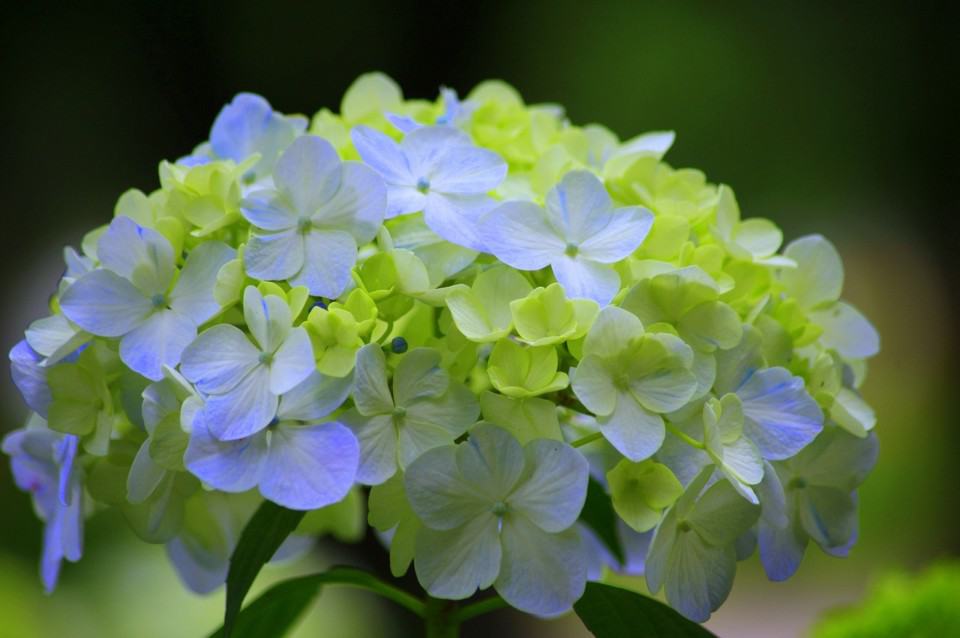
Hydrangea blooms are turning green for several normal, natural reasons. The most common cause is bloom age: sepals start green, develop pink, blue, or white pigment at full bloom, then revert to green as those pigments fade late in the season.
Other causes include variety genetics, soil pH shifts, heat and sun exposure, and in some cases a temporary unexplained phenomenon that resolves on its own within one to two seasons.
If your once pink or blue hydrangea has turned green, your plant is almost certainly healthy. Green blooms are not a sign of failure.
They are a window into one of the most fascinating aspects of hydrangea biology: the fact that colour in these plants is not fixed, but a living reflection of age, environment, soil chemistry, and genetics.
This guide explains every cause clearly, gives you a step-by-step diagnosis process, and tells you exactly what to do, and what not to do, when your blooms go green.
Quick Diagnosis: What Type of Green Are You Seeing?
Before reading further, identify which description best matches your plant. This single step will point you to the most likely cause.
| What You Are Seeing | Most Likely Cause | Jump To |
| Blooms opened green and have stayed green all season | Variety genetics (e.g. Limelight, Annabelle) | Cause 2: Variety Genetics |
| Blooms were pink or blue and turned green late in summer | Natural bloom ageing | Cause 1: Natural Ageing |
| Blooms turned green after a period of intense heat | Heat and sun stress | Cause 4: Weather and Environment |
| Blooms faded green after heavy rain or soil amendment | Soil pH shift | Cause 3: Soil pH and Aluminium |
| Normally coloured plant suddenly all-green for no reason | Unexplained temporary phenomenon | Cause 6: The Unexplained Green Year |
| Leaves also yellowing or pale alongside green blooms | Nutrient deficiency | Cause 5: Nutrient Imbalance |
What Hydrangea Flowers Actually Are (Why This Matters)
To understand why hydrangea blooms turn green, it helps to know what those blooms actually are. The showy, coloured parts of a hydrangea flower are not petals.
They are sepals, modified leaf-like structures that protect the flower bud. Sepals are naturally green because they contain chlorophyll, the same pigment that makes leaves green.
When a hydrangea bloom develops, pigment compounds called anthocyanins accumulate in the sepals and overpower the underlying green chlorophyll, producing the pink, blue, purple, or white colours we associate with the plant.
When those anthocyanins fade, for any reason, the green chlorophyll underneath is simply revealed again.
This is why green hydrangea blooms are rarely a problem. They are showing you their natural baseline colour. Understanding this makes every other cause in this guide much easier to interpret.
Cause 1: Natural Bloom Ageing (Why Hydrangea Blooms Turn Green Over Time)
The single most common reason hydrangea blooms turn green is that they are ageing naturally. Every hydrangea bloom goes through a predictable colour journey from bud to maturity.
| Bloom Stage | Typical Colour | What Is Happening |
| Bud stage | Pale green or cream | Chlorophyll present before anthocyanin pigments form |
| Full bloom | Pink, blue, purple, or white | Anthocyanins at peak intensity, chlorophyll masked |
| Ageing bloom | Fading to soft green | Anthocyanins breaking down, chlorophyll reappearing |
| Late season | Green to antique hues | Full reversion to chlorophyll as the bloom matures |
This process is called senescence. It happens most noticeably in late summer and early autumn as days shorten, temperatures cool, and the plant begins to slow down.
The green tones that appear are often tinged with pink, lilac, or burgundy, which is a sign the original pigment is still partially present underneath.
| How to tell if ageing is the cause: Look at when the green appeared. If your blooms were full colour through peak summer and only started shifting in late July, August, or September, natural ageing is almost certainly the explanation. No action is needed. |
UK Seasonal Colour Calendar
In the UK, the typical colour journey looks like this:
| Month | What to Expect |
|---|---|
| May to June | Buds opening, pale green or cream |
| June to July | Peak colour: pink, blue, purple, or white |
| August | Colour beginning to soften and fade |
| September | Green and antique tones appearing |
| October onwards | Full antique green, ideal for cutting and drying |
These timings shift by two to four weeks depending on your region, variety, and the season’s weather. Gardens in the south of England typically reach peak bloom two to three weeks ahead of those in Scotland or northern England.
Cause 2: Variety Genetics (Some Hydrangeas Are Meant to Be Green)
Several of the most popular hydrangea varieties are deliberately bred to produce green blooms. If you have one of these, the green is not a problem to solve. It is the point.
| Variety | Species | Green Bloom Behaviour |
| Limelight | Hydrangea paniculata | Bright lime-green blooms that hold their colour all season before fading to cream and pink in autumn |
| Little Lime | Hydrangea paniculata | Compact version of Limelight with the same strong green tones |
| Annabelle | Hydrangea arborescens | Opens creamy white, turns soft green within two weeks of full bloom and holds that tone into autumn |
| Incrediball | Hydrangea arborescens | White blooms age to green reliably from midsummer onwards |
| Endless Summer | Hydrangea macrophylla | Pink or blue blooms commonly show green tones as they age or during temperature fluctuations |
| Oakleaf | Hydrangea quercifolia | Blooms open light green, shift to white, then take on dusty rose and green tones in autumn |
| Important note: Hydrangea paniculata and Hydrangea arborescens varieties (including Limelight, Little Lime, Annabelle, and Incrediball) do not respond to soil pH in the same way as Hydrangea macrophylla. Their colour cannot be changed by adjusting soil acidity. Attempting to do so will not make them less green. |
Cause 3: Soil pH and Aluminium Availability
Soil chemistry drives colour in bigleaf hydrangeas (Hydrangea macrophylla) more than any other factor. The colour of these blooms is controlled by the availability of aluminium ions in the soil, which is in turn controlled by soil pH.
How the Chemistry Works
- Acidic soil (pH 5.0 to 5.5): Aluminium dissolves into the soil solution and is absorbed by the plant. Aluminium reacts with the anthocyanin pigments to produce blue and purple tones
- Neutral to mildly acidic soil (pH 6.0 to 7.0): Aluminium is less available. Pigments shift toward pink, lavender, or faded green
- Alkaline soil (pH 7.0 or above): Aluminium is locked out entirely. Pigments produce pink or, when faded, greenish-cream tones
| Soil pH | Aluminium Availability | Likely Bloom Colour |
| 5.0 to 5.5 (acidic) | High | Blue or purple |
| 5.5 to 6.5 (mildly acidic) | Medium | Lavender or mixed |
| 6.5 to 7.0 (neutral) | Low | Pink or faded green |
| 7.0 or above (alkaline) | None | Pink or greenish-cream |
Why Soil pH Can Shift Mid-Season
Even if your soil was correctly balanced at the start of the season, several factors can shift it during summer:
- Heavy rainfall can leach acidifying minerals from the soil, raising the pH
- Lime used nearby, including builders lime from concrete or paths, raises soil alkalinity
- Some fertilisers, particularly those high in nitrogen, can alter pH over time
- Organic compost and leaf mould gradually acidify soil, which helps maintain blue tones
Testing and Adjusting Your Soil
The most effective first step is a soil pH test. Home testing kits are inexpensive and widely available in UK garden centres. For a more precise result, send a sample to your local agricultural extension lab or the RHS advisory service.
| Goal | Amendment to Use | Effect on pH | Notes |
| Encourage blue blooms | Aluminium sulphate or garden sulphur | Lowers pH | Apply in early spring before buds form; always follow label dosing |
| Encourage pink blooms | Garden lime or wood ash | Raises pH | Apply slowly over several months; sudden changes stress roots |
| Maintain stable colour | Organic compost or leaf mould | Stabilises | Annual mulching is the most consistent long-term approach |
| Important: Apply all soil amendments slowly and in small quantities. Dramatic pH changes can shock roots, delay flowering, and in severe cases cause leaf scorch. Always test before you amend, and retest after six to eight weeks to assess the effect. |
| Container growing tip: Controlling soil pH is significantly easier in containers than in open ground. If you want consistent, predictable colour, consider growing Hydrangea macrophylla in a pot using an ericaceous (acid-loving) compost mix. You can fine-tune pH far more precisely than in a garden border. |
Cause 4: Weather, Heat, and Sun Exposure
Environmental conditions have a direct effect on how strongly anthocyanin pigments develop and how long they last. Even a correctly balanced soil will not sustain vibrant colour if the plant is growing in the wrong conditions.
How Heat Affects Bloom Colour
High temperatures accelerate the breakdown of anthocyanin pigments. This is why hydrangeas in hot, exposed gardens often turn green faster than those in sheltered or partially shaded spots.
The process is not damaging to the plant. It simply means the pigments fade more quickly than in cooler conditions.
Conversely, cooler nights, particularly in late summer, can actually reactivate chlorophyll production in older blooms, deepening the green tone.
This is why the green transition often accelerates after the first cool nights of late August or September in the UK.
How Light Duration Drives Colour
Longer days generate more energy in the plant, which supports the production and maintenance of colour pigments.
As day length shortens in late summer and autumn, the plant has less energy for pigment production and green tones naturally emerge. This is a seasonal inevitability rather than a problem to fix.
Practical Light Management
| Condition | Effect on Bloom Colour | What to Do |
| Full afternoon sun in summer | Pigments fade faster, green appears earlier | Provide afternoon shade if possible, particularly in southern UK gardens |
| Deep shade all day | Blooms may be weak and pale | Morning sun with afternoon shade is the ideal balance |
| Partial shade | Colour holds longest and most vibrantly | East-facing or north-facing borders are often best for colour longevity |
| Very hot, dry summers | Accelerated fading and early greening | Increase watering and apply a thick mulch to regulate soil temperature |
Cause 5: Nutrient Imbalance
While nutrient issues are less common than the causes above, they can contribute to poor colour development or premature fading in some cases.
Excess Nitrogen
Nitrogen promotes vigorous leafy growth at the expense of flowering. Too much nitrogen, particularly from high-N lawn fertilisers applied nearby or from heavy manure mulching, can result in weak, washed-out bloom colour.
The blooms may appear pale or greenish because the plant is prioritising foliage growth over flower pigment production.
Phosphorus and Iron Deficiency
Phosphorus supports flower development and pigment formation. Iron is involved in chlorophyll regulation. If both are lacking, blooms may be pale and leaves may show yellowing between veins (a sign of chlorosis).
These deficiencies are more common in very alkaline soils where these minerals become locked up and unavailable to the plant.
| Nutrient Issue | Signs to Look For | Recommended Fix |
| Excess nitrogen | Very lush, dark green foliage with few or pale blooms | Switch to a low-nitrogen, high-potassium fertiliser (e.g. 10-20-10) |
| Phosphorus deficiency | Poor bloom development, weak stems, dull colour | Apply a balanced slow-release fertiliser formulated for flowering shrubs |
| Iron deficiency (chlorosis) | Yellowing leaves with green veins, particularly on young growth | Apply a sequestered iron product; improve soil pH if very alkaline |
| Fertilising guidance: Feed hydrangeas once in early spring and once after the first flush of bloom. Use a balanced fertiliser low in nitrogen, such as a 10-20-10 blend or one labelled for flowering shrubs. Avoid feeding after late summer as this can stimulate new growth that will not harden before winter frosts. |
Cause 6: The Unexplained Green Year (What Most Guides Do Not Mention)
There is one cause of green hydrangea blooms that horticulturalists openly acknowledge they cannot fully explain.
Occasionally, a hydrangea that has produced perfectly normal pink or blue blooms for years will produce entirely green flowers for a season or two, then return to its normal colour with no intervention at all.
This is a documented phenomenon reported by experienced gardeners and horticultural sources alike.
The cause appears to involve a combination of unusual weather patterns, minor fluctuations in soil trace elements, or variation within the plant’s own strain. It is not a sign of disease or poor care.
| If this sounds like your plant: If your hydrangea is otherwise healthy, has been performing normally for years, and has suddenly produced green blooms this season with no obvious environmental change, this temporary phenomenon is the likely explanation. Wait one to two seasons. In the vast majority of cases, normal colour returns on its own. |
One practical step that may help: apply a balanced fertiliser containing trace elements (also labelled as micronutrients or chelated minerals).
Minor deficiencies in trace elements such as manganese, boron, or copper are not always visible but can affect pigment chemistry.
A fertiliser containing a full trace element profile is a low-risk, inexpensive intervention that some growers report helps the plant return to colour more quickly.
How to Keep Hydrangea Blooms Vibrant and Delay Greening
While some greening is inevitable as blooms age, these practical steps will extend peak colour and slow the transition.
Position and Light
- Plant in a position that receives morning sun and afternoon shade, which is the ideal balance for colour longevity
- Avoid south-facing walls or exposed beds that receive intense afternoon sun in summer
- In the UK, east-facing and north-east-facing borders often produce the longest-lasting colour
Watering
- Water deeply and consistently, particularly during dry spells. Drought stress accelerates pigment breakdown
- Apply a 5 to 8cm layer of organic mulch around the base to retain soil moisture and regulate temperature
- Water at the base of the plant rather than overhead to prevent fungal issues
Soil Management
- Test soil pH once a year in early spring before growth begins
- Apply amendments gradually over several months rather than in a single heavy application
- Annual mulching with leaf mould or composted bark helps maintain steady, slightly acidic soil conditions
Feeding
- Use a low-nitrogen fertiliser formulated for flowering shrubs
- Feed once in early spring and once after the first bloom flush
- Do not feed after August in the UK as this risks stimulating soft growth before winter
Pruning
Incorrect pruning is one of the most common causes of poor flowering. Many hydrangeas bloom on old wood, meaning the flower buds for next year are already present on this year’s stems by late summer.
| Species | When to Prune | Where Buds Form |
| Hydrangea macrophylla (bigleaf) | Immediately after flowering, never in autumn or spring | Old wood (previous year’s stems) |
| Hydrangea paniculata | Late winter to early spring | New wood (current season’s growth) |
| Hydrangea arborescens | Late winter to early spring, can cut to ground | New wood (current season’s growth) |
| Hydrangea quercifolia (oakleaf) | Immediately after flowering | Old wood (previous year’s stems) |
| Common pruning mistake: Cutting back Hydrangea macrophylla and Hydrangea quercifolia in autumn or early spring removes the flower buds that are already set on the old wood. This results in a plant that produces healthy foliage but no blooms for that season. |
Embracing Green Blooms: Drying and Decorating with Antique Hydrangeas
Before you try to prevent or reverse the green transition, it is worth knowing that many gardeners actively seek out green hydrangea blooms for their aesthetic appeal.
The antique green and dusky tones that appear as blooms age are highly prized in dried flower arrangements, cottage garden planting schemes, and interior decoration.
When to Cut for Drying
The best time to cut hydrangea blooms for drying is when they are just beginning to transition from full colour into the early green stage.
At this point, the bloom has enough structure to hold its shape when dried but has not yet become papery or fragile.
Blooms cut too early will wilt. Blooms cut at the full green antique stage will dry beautifully and hold their colour for months.
How to Dry Hydrangea Blooms
- Cut stems at an angle to a length of at least 30cm to allow for trimming later
- Remove all leaves from the stem as these will rot before the bloom dries
- Place stems in a vase with a small amount of water, approximately 5cm. The blooms dry slowly as the water evaporates, which produces a better result than hanging drying for most varieties
- Position in a cool, dry room with good airflow and away from direct sunlight
- Leave undisturbed for two to three weeks until fully dried
| Best varieties for drying: Limelight, Annabelle, and Incrediball are the easiest varieties to dry because their blooms are naturally robust. Mophead Hydrangea macrophylla varieties dry well when cut at the antique green stage. Avoid cutting very young or newly opened blooms as these will wilt before drying. |
Step-by-Step Diagnosis: Working Out Why Your Blooms Turned Green
Follow these steps in order to identify the cause in your own garden.
- Check when the green appeared. If it happened in late summer or early autumn after a long period of full colour, natural ageing is the cause. No action needed
- Identify the variety. Check the plant label or look up your hydrangea by leaf shape and bloom type. If it is a paniculata or arborescens variety, green blooms are entirely normal and expected
- Recall any recent garden changes. Was lime used nearby? Did you apply a fertiliser? Was there unusually heavy rainfall? Any of these can shift soil pH and affect colour
- Test the soil pH. This single step confirms or rules out soil chemistry as a cause. A basic home test kit is sufficient for an initial reading
- Assess the growing position. Is the plant in full afternoon sun? Heat and light exposure accelerate the green transition significantly
- Look at the leaves. If leaves are yellowing or pale alongside the green blooms, a nutrient issue may be contributing. If leaves are healthy and dark green, the cause is almost certainly environmental or genetic
- Consider the history. If none of the above applies and your plant has been healthy and well-coloured for several years, you may be experiencing the temporary unexplained green year. Wait one to two seasons before making any changes
Key Takeaways: What to Remember
- Green blooms are almost always normal. In the vast majority of cases they indicate natural ageing, variety genetics, or a seasonal environmental response
- Sepals are naturally green. The colour you see in hydrangea blooms is produced by pigments overlaying a green base. When those pigments fade, green is simply revealed again
- Soil pH only affects Hydrangea macrophylla. Paniculata and arborescens varieties will not change colour in response to soil amendments
- Amend soil slowly. Rapid pH changes cause more harm than the greening you are trying to prevent
- Green blooms have genuine value. The antique tones that appear as blooms age are beautiful in dried arrangements and many gardeners consider them the best stage of the plant’s seasonal display
- Sometimes there is no explanation. If your plant inexplicably goes green for a season or two, a trace element fertiliser is a low-risk option and patience is usually all that is needed
Frequently Asked Questions
Why did my hydrangea blooms turn green overnight?
Overnight colour changes typically happen after a sharp drop in night temperature in late summer.
Cool temperatures reactivate chlorophyll production in ageing blooms and can cause the green transition to happen quite suddenly. This is natural and does not indicate any problem with the plant.
Will green hydrangea blooms turn back to pink or blue?
Once a bloom has aged and turned green, it will not revert to its original colour.
The pigments have already broken down. However, new blooms produced later in the season or the following year will develop their full colour again, provided soil conditions and light are suitable.
In the case of the unexplained green year, the whole plant typically returns to normal colour the following season.
My hydrangea has been green for two years. Is something wrong?
Two seasons of green blooms is unusual but not necessarily a cause for alarm. Test your soil pH first as this is the most common controllable cause.
If soil pH is in the correct range and the plant is otherwise healthy, apply a balanced fertiliser containing trace elements and observe for another season.
If the problem persists beyond three seasons alongside other signs of poor health, consider having the soil professionally tested for micronutrient deficiencies.
Do green hydrangea blooms mean the soil pH is wrong?
Not necessarily. Green blooms are most commonly caused by natural ageing, variety genetics, or environmental factors rather than soil chemistry.
Soil pH is only a significant driver of colour in Hydrangea macrophylla varieties. Test the soil before amending it, and check the variety first, as many gardeners have spent years adjusting soil pH for varieties that will never respond to it.
Can I use green hydrangea blooms for dried flower arrangements?
Yes, and green or antique-toned blooms are often considered ideal for drying.
Cut stems when the bloom is just beginning to show green or antique tones, place in a small amount of water in a cool dry room, and allow to dry slowly over two to three weeks.
The resulting dried blooms hold their shape and colour beautifully and are widely used in interior decoration and flower arranging.
Why do Annabelle hydrangeas always go green?
Annabelle is a Hydrangea arborescens variety whose blooms are genetically programmed to turn green after about two weeks at full white bloom.
This is entirely normal and expected behaviour for this variety. It does not respond to soil pH adjustments. The green stage is considered part of the plant’s seasonal display and the blooms dry exceptionally well at this stage.
Does deadheading help prevent Hydrangea blooms turning green?
Selective deadheading of fully aged green blooms can encourage the plant to redirect energy toward new flower development on suitable varieties.
However, for hydrangeas that bloom on old wood (Hydrangea macrophylla and Hydrangea quercifolia), be careful to remove only the spent blooms and not the buds forming on the stem below, as these are next year’s flowers.
Why are my hydrangeas green in summer, not just autumn?
Early-season greening in summer, rather than the expected late-season transition, is most commonly caused by intense heat and sun exposure, soil pH that is too neutral or alkaline, nutrient imbalance particularly with excess nitrogen, or the plant being a variety whose natural behaviour includes a green stage.
If blooms go green in June or July, start with a soil pH test and assess the growing position.
Final Thoughts: Why Are My Hydrangea Blooms Turning Green?
Green hydrangea blooms are one of the most commonly misunderstood aspects of growing these plants.
Once you understand that the colour in hydrangea sepals is a temporary overlay on a naturally green structure, the whole picture becomes much clearer.
Green is not a failure state. It is the plant’s default, and every other colour is a beautiful but impermanent addition to that baseline.
For most gardeners, the answer to green blooms is to observe, enjoy, and wait. For those who want to intervene, a soil pH test is always the right first step.
Make changes slowly, match your method to the specific variety you are growing, and consider whether the antique green tones your plant is displaying might actually be worth celebrating rather than reversing.
The gardeners who enjoy hydrangeas most are usually the ones who work with the plant’s natural colour cycle rather than fighting against it.
| What’s next: Once you understand why your blooms turn green, the natural follow-on question is how to get the most from your hydrangeas across the whole season. Consider planning your planting scheme around the full colour journey from early bud to antique green, and experiment with drying blooms at different stages to see which tones work best in your home or garden. |