
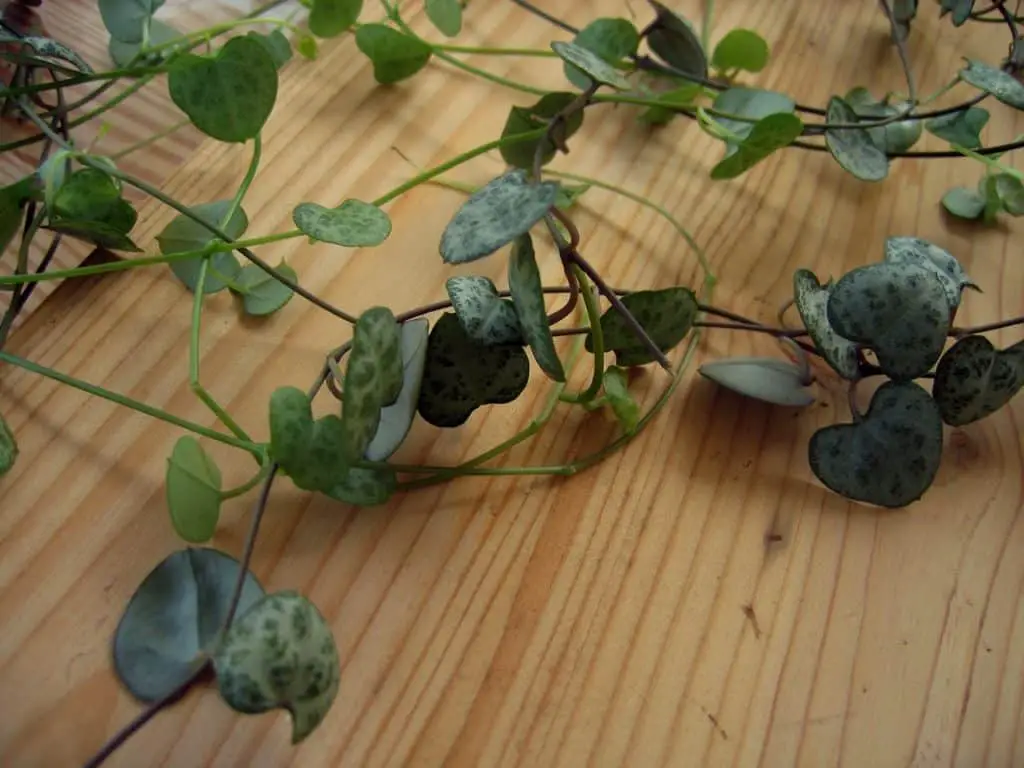
Want to know how to keep a variegated string of hearts pink or make it even pinker? Focus on providing the right light, soil, watering routine, and fertilizer.
With the right care, your plant’s pink tones will pop! Here’s everything you need to know to get that vibrant blush.
The variegated string of hearts (Ceropegia woodii variegata) is a showstopper for any plant lover, thanks to its delicate trailing vines and unique heart-shaped leaves that often blush with shades of pink.
But many beginners find themselves asking, “Why isn’t mine staying pink?” or “How do I make the pink stronger?”
Let’s walk through exactly how to achieve and maintain that coveted pink hue, no green thumb required!
Understanding the Genetics of Pink Variegation
Pink variegation in the string of hearts is primarily genetic, it’s part of what makes this variety so special.
However, that pink color can fade if the plant’s environment doesn’t support variegation. It’s not a permanent trait; it needs proper care to thrive and stay bright.
Pink Pigmentation Needs Stress, But the Right Kind!
Mild stress, such as strong light or slightly cooler temps can encourage brighter pink coloring. The trick is learning how to create the “good kind” of stress without harming your plant.
Key Factors That Influence Pink Coloration
To really dial in on pink vibrancy, consider the following factors:
| Factor | Influence on Pink Coloration | What to Aim For |
| Light | Strong light deepens pink hues | Bright, indirect sun or filtered direct sun |
| Soil | Affects nutrient uptake and drainage | Fast-draining succulent mix |
| Watering | Too much water can dull colors | Let soil dry between waterings |
| Fertilizer | Balanced nutrition supports healthy variegation | Low-nitrogen, diluted feed monthly |
| Temperature | Cooler temps can bring out pink | 60–75°F with slight dips in fall |
What You Should Avoid
- Low Light: This leads to reversion, leaves lose their pink and revert to plain green and white.
- Overwatering: Constant moisture can cause the plant to focus on survival, not aesthetics.
- Too Much Nitrogen: This promotes leafy green growth at the expense of variegation.
Quick Tips for Boosting Pink Color
- Move the plant closer to a bright window (east- or south-facing is ideal).
- Use a grow light if natural light isn’t strong enough.
- Consider placing it in a terracotta pot to wick away excess moisture.
- Don’t fertilize too frequently, less is more when it comes to pink preservation.
- Slightly reduce watering in cooler months to promote pigmentation.
Optimal Lighting Conditions to Enhance Pink Variegation in String of Hearts
Providing the right light is the #1 secret to enhancing pink variegation in your string of hearts.
Aim for bright, indirect sunlight or filtered direct sun to encourage vibrant pink tones without scorching the delicate leaves.
Light makes or breaks the pink variegation on your string of hearts. Without enough of it, the plant reverts to mostly green and white. But with too much direct sun, especially in the afternoon, you risk burning its delicate foliage.
What Type of Light Does a Variegated String of Hearts Need?
This plant craves bright, indirect sunlight. It evolved in rocky cliffside environments with dappled sun, so it’s adapted to thrive in filtered light conditions.
Best Lighting Options:
- South-facing window with sheer curtains
- East-facing window with a few hours of morning sun
- Grow lights for dark homes or winter months
Pro Tip: Look for signs of pink developing on newer leaves, this means your lighting is spot-on.
Can It Handle Direct Sun?
Yes, but filtered or morning direct sun only. Harsh afternoon rays can bleach or crisp the foliage.
| Light Type | Pink Variegation Effect | Risk Level |
| Low light | Fades pink, promotes reversion | High (loss of variegation) |
| Bright indirect light | Enhances and maintains pink | Low (ideal) |
| Morning direct sun | Deepens pink gradually | Low (with acclimation) |
| Harsh afternoon sun | Causes sunburn and leaf damage | High (especially in summer) |
Grow Light Setup for Year-Round Pink
If your home doesn’t offer consistent bright natural light, a grow light is your best friend. Choose a full-spectrum LED grow light and keep it:
- 12–16 inches above the plant
- On for 12–14 hours per day
Avoid keeping it on 24/7, your plant needs a rest period too!
Signs Your Light Needs Adjustment
Too Little Light
- Pink disappears
- Leaves become greener
- Leggy growth (long gaps between leaves)
Too Much Light
- Crispy, scorched leaf edges
- Bleached or faded spots
- Curling or drooping vines
Best Soil Mix for Vibrant Pink Variegated String of Hearts
To keep your variegated string of hearts pink and healthy, use a fast-draining soil mix that mimics its native rocky habitat.
A blend of cactus mix, perlite, and orchid bark creates perfect airflow and prevents overwatering, key for pink vibrancy.
The right soil can be the difference between a dull, faded plant and one bursting with pink.
That’s because proper drainage not only prevents root rot, but also ensures nutrients and light stress are efficiently translated into that signature rosy color.
Why Well-Draining Soil is Critical
Ceropegia woodii variegata is semi-succulent. That means its roots hate staying wet, and soggy soil can lead to a stressed, fading plant, not in a good way.
Excess moisture can:
- Dull the pink coloration
- Cause root rot
- Lead to fungal issues
- Encourage green reversion (loss of variegation)
DIY Soil Mix Recipe for Rosy Results
You can absolutely use a store-bought succulent or cactus mix, but for best results, mix your own to tailor moisture control:
| Ingredient | Function | Ratio |
| Cactus or succulent mix | Base blend with light structure | 50% |
| Perlite or pumice | Improves aeration and drainage | 25% |
| Orchid bark or coco chips | Mimics chunky native substrate | 15% |
| Horticultural charcoal | Absorbs toxins, keeps soil fresh | 10% |
Pro Tip: If your home is humid or you tend to overwater, increase the perlite or pumice to 40%.
How to Test Your Soil’s Drainage
Before you pot your plant:
- Moisten the soil blend and squeeze a handful.
- It should fall apart easily, not stay clumped.
- Water should drain out of the pot in seconds, not minutes.
Choosing the Right Pot
Pair your soil mix with a terracotta pot that has a drainage hole. Terracotta absorbs excess moisture and breathes, this further to protect your plant from soggy roots, which in turn helps it put energy into coloring up.
Watering Practices to Maintain Pink Hue in Variegated String of Hearts
To maintain the pink hue in your variegated string of hearts, water deeply but infrequently, allowing the soil to dry out completely between waterings.
Overwatering dulls pink tones, while controlled drought stress enhances variegation and keeps the leaves blushing.
Watering is one of the most misunderstood factors in keeping pink variegation bright. This semi-succulent thrives on a rhythm of soak and dry, not daily sips or frequent misting.
How Watering Affects Pink Coloration
Too much water leads to lush, all-green growth that lacks the signature pink margins.
That’s because overwatered plants prioritize survival growth over stress pigmentation (which causes pink). In contrast, controlled drought stress nudges the plant into showing off those pinks as a self-protective adaptation.
Ideal Watering Frequency
| Season | Frequency (Approximate) | Notes |
| Spring/Summer | Every 10–14 days | Let soil fully dry between |
| Fall/Winter | Every 3–4 weeks | Cut back due to dormancy |
Check the soil, not the calendar. Always poke a finger 2 inches deep, if it feels dry, it’s time to water.
Signs of Overwatering vs. Underwatering
| Symptom | Likely Cause | Action to Take |
| Faded pink or mostly green | Overwatering | Increase dry periods |
| Mushy or yellowing leaves | Root rot | Repot into dry soil ASAP |
| Wrinkled or curled leaves | Underwatering | Water deeply and wait |
| Bright pink intensifying | Controlled drought | Maintain same rhythm |
How to Water Correctly
- Use room-temperature water.
- Water thoroughly until it drains from the bottom.
- Discard excess water, never let it sit in a saucer.
- Let the soil dry out 100% before the next drink.
If using a grow light or in a warm climate, your plant may dry out quicker, so adjust accordingly.
Fertilization Tips to Support Pink Coloration in String of Hearts
To support and enhance the pink coloration in your variegated string of hearts, use a diluted, balanced fertilizer once a month during the growing season.
Over fertilizing can wash out pink tones, while gentle feeding encourages healthy growth and vibrant variegation.
When it comes to pink variegation, feeding your plant correctly matters just as much as light or soil.
While too much fertilizer can encourage green, leggy growth, a gentle, well-timed nutrient boost can enhance the contrast and intensity of the pink areas on the leaves.
What Kind of Fertilizer Works Best?
The goal is to feed gently, not force rapid growth. Go for:
- Balanced liquid fertilizer (10-10-10 or 20-20-20) diluted to ¼ or ½ strength
- Low-nitrogen formulas if your plant is getting too leafy and losing pink
- Organic options like worm tea or seaweed extract for slow, steady feeding
Avoid high nitrogen formulas, they encourage fast green growth, which overshadows variegation.
Ideal Fertilizing Schedule
| Season | Frequency | Notes |
| Spring/Summer | Once every 4 weeks | Use during active growth |
| Fall/Winter | Skip fertilizing | Plant enters semi-dormancy; less food needed |
Apply only to moist soil, never fertilize a dry plant, or you risk root burn.
Micronutrients That Boost Color
Look for fertilizers that include:
- Iron – supports chlorophyll without overpowering pink tones
- Magnesium – essential for leaf pigmentation
- Calcium – strengthens plant tissues and helps maintain vivid variegation
These trace elements often get ignored, but they play a major role in overall leaf health, and colorful expression.
Signs You’re Overdoing It
| Symptom | Likely Issue | Fix |
| Fast, leggy growth | Too much nitrogen | Switch to low-N or cut back |
| Leaf edges browning | Fertilizer burn | Flush soil, reduce dosage |
| Fading pink tones | Overfeeding | Skip a month or dilute further |
Expert Insight: Less Is More
Over the years, I’ve found that less frequent, diluted feedings create the best results. I once switched from biweekly to monthly feedings at half-strength, and within one season, the pink tones looked sharper and healthier than ever before.
How Temperature and Humidity Affect Pink Leaves on String of Hearts
Maintaining moderate warmth and slightly dry air conditions helps variegated strings of hearts develop stronger pink tones.
High humidity or cool temperatures can mute color intensity, while warm, dry environments encourage bright variegation and leaf blush.
Your variegated string of hearts isn’t just reacting to light and water, it’s also responding to your home’s climate. The pink variegation is especially sensitive to heat and air moisture, making this an important part of your plant care routine.
Best Temperature Range for Pink Variegation
This plant loves warmth, especially when aiming for stronger pink colors. The sweet spot:
| Growth Phase | Ideal Temperature Range |
| Active Growth | 70–85°F (21–29°C) |
| Dormant Season | 60–70°F (15–21°C) |
If your plant gets too cold (below 55°F/13°C), not only will growth slow, but you’ll likely lose the vivid colorations, including that precious pink.
How Humidity Impacts Coloration
Unlike many houseplants, the string of hearts prefers moderate to low humidity. Why?
- Low humidity mimics the plant’s native semi-arid conditions and promotes stress-induced pigmentation (i.e., pink!)
- High humidity may make the plant go greener and stretch out, diminishing pink edges
Aim for 30–50% humidity for the best pink tones.
Pro Tip: If you’re in a humid climate, improve air circulation with a fan and avoid grouping your plant with humidity-loving species like calatheas.
What to Do in Seasonal Shifts
- In winter: Keep your plant away from drafty windows or cold floors. Use a grow light if daylight dips below 6 hours.
- In summer: Watch for overheating if placed in a greenhouse or near sun-facing windows. Move slightly back if leaves begin to crisp.
Table: Climate Checklist for Pink-Promoting Conditions
| Factor | Optimal for Pink | Avoid |
| Temperature | 70–85°F | Below 55°F |
| Humidity | 30–50% | Over 60% |
| Air Circulation | Good airflow | Stagnant or closed rooms |
| Seasonal Adjusting | Gradual shifts | Sudden drops or spikes |
Personal Insight: Pinkest in the Dry Heat
My string of hearts gave me its most vibrant pinks during a warm, dry summer where I ran a dehumidifier daily.
It was a night-and-day difference, rich pinks by August! That’s when I learned: temperature and humidity are silent influencers.
Does Pruning Help String of Hearts Stay Pink? (And How to Do It Right)
Yes, pruning your variegated string of hearts promotes fuller growth and stronger pink coloration by redirecting energy to new leaves.
Strategic snips stimulate vibrant, youthful growth that often shows off richer pink hues, especially under the right light.
Many beginners shy away from pruning their trailing beauties, but a little trimming can go a long way in enhancing the health, and color of your plant.
Why Pruning Encourages Pink Growth
Here’s the science: when you prune, the plant’s energy shifts from sustaining older, sometimes green-dominant growth, to producing fresh leaves, which are more likely to show off pronounced variegation and pink tones.
Additional perks:
- Reduces legginess
- Stimulates bushier vines
- Increases airflow (which supports pigment stability)
When to Prune Your String of Hearts
- Spring to early summer is the best time. The plant is actively growing and will bounce back quickly.
- Avoid pruning during dormancy (late fall–winter), as this can stress the plant unnecessarily.
How to Prune for Maximum Pink Pop
Follow these steps for best results:
- Use sterilized scissors or snips. Dirty tools invite disease.
- Trim just above a node (where leaves meet the vine) to encourage branching.
- Remove green-dominant vines that aren’t showing much pink.
- Don’t overdo it. Start by pruning about 15–20% of the plant.
You can also propagate the healthy cuttings, they often retain pink patterns, especially if grown in bright light.
Visual Guide: Pruning Areas for Pinker Growth
| Vine Section | Prune? | Why? |
| Long green vines | ✅ | Redirects energy to pinker growth |
| Pink-tipped vines | ❌ | Keep! These show ideal pigmentation |
| Sparse lower growth | ✅ | Encourages fuller base and new leaves |
Pro Tip: Rotate While You Prune
Every time you prune, rotate the pot. This ensures all sides get even light, further supporting balanced, colorful growth throughout the plant.
First Hand Experience: Pinker with Every Snip
I once hesitated to prune a vine that stretched over 4 feet, until I noticed the lower half had lost its pink entirely.
After trimming and giving it a few weeks in bright, filtered light, the new leaves came in hot pink and cream. That’s when I realized: pruning isn’t punishment, it’s pink potential.
What Role Does Watering Play in Keeping Your String of Hearts Pink?
Proper watering prevents stress and supports vibrant pink color in variegated strings of hearts.
Overwatering can dull variegation and lead to root rot, while under watering may cause leaves to fade or drop. A balanced approach encourages bold pigmentation and healthy trailing vines.
Watering isn’t just about hydration, it directly affects your plant’s coloring. Pink variegation thrives under just-right conditions, and both too much or too little water can dull or damage the plant’s unique patterns.
Overwatering: The Fast Track to Faded Colors
Too much water saturates the soil and chokes the roots. This leads to:
- Dull or mushy leaves
- Yellowing with loss of pink pigmentation
- Increased risk of root rot (which halts new pink growth altogether)
Symptoms of overwatering include:
- Leaves turning soft or translucent
- Soil staying wet for more than 4–5 days
- A funky, sour smell from the pot
Underwatering Can Also Backfire
On the flip side, underwatering, especially prolonged can lead to:
- Shriveling and leaf drop
- Washed-out, pale tones
- Stunted growth
While some dryness mimics the plant’s native environment, excessive drought leads to stress, which often causes the plant to sacrifice pigmentation to survive.
How Often Should You Water for Maximum Pink?
Use the “dry-down” method for ideal hydration:
- Let the top 2–3 inches of soil dry before watering again.
- Water thoroughly until excess drains from the bottom.
- Make sure the pot has excellent drainage to prevent pooling.
In general:
| Season | Watering Frequency |
| Spring–Summer | Every 7–10 days (adjust as needed) |
| Fall–Winter | Every 14–21 days (slower growth) |
Always adjust based on your home’s conditions, light, temperature, and humidity all influence how fast the soil dries.
Quick Watering Do’s and Don’ts
| Do | Don’t |
| Use room-temp water | Use cold water (shocks roots) |
| Empty excess from saucer | Let plant sit in pooled water |
| Check soil with your finger | Water on a schedule without checking |
Does Soil Type Influence Pink Variegation in String of Hearts?
Yes, well-draining, airy soil supports stronger pink variegation in the string of hearts by preventing overwatering stress and encouraging healthy root growth.
Compact or poorly draining soil can dull colors, cause root rot, and reduce your plant’s ability to produce vibrant pink leaves.
Soil might seem like just “dirt,” but for your variegated string of hearts, it’s the difference between pale vines and pink-perfection! Let’s dig into what kind of mix your plant really needs.
Why Soil Matters for Pink Pigmentation
Pink coloring is closely tied to plant health, especially root health. If the roots are stressed (due to soggy or compacted soil), the plant struggles to maintain vibrant pigmentation.
Great soil does three things:
- Drains quickly
- Retains light moisture (not wet!)
- Allows roots to breathe
This creates the ideal environment for robust, colorful growth.
The Best Soil Mix for Pink String of Hearts
Use a light, chunky mix designed for succulents. Here’s a go-to recipe:
| Ingredient | Purpose |
| 2 parts cactus mix | Fast-draining base |
| 1 part perlite | Increases aeration |
| 1 part orchid bark | Adds chunkiness & root flow |
| Optional: ½ part sand | Boosts drainage even further |
Want to keep it simple? Look for “succulent & cacti” mixes at garden centers, and mix in some perlite for extra fluff.
Signs Your Soil Needs a Switch
- Water sits on the surface too long
- Leaves look dull or start yellowing
- Roots are mushy or smell off
- Soil compacts and pulls away from the edges when dry
If any of these sound familiar, it’s time to repot with a better-draining mix!
Pro Tip: Terracotta + Good Soil = Pink Power
Terracotta pots wick away excess moisture, and when combined with fast-draining soil, they create the ideal combo for pink vibrancy.
I noticed richer tones in my vines after making this switch, plus, the soil dries evenly, preventing root problems before they start.
How Can You Use Fertilizer to Boost Pink Variegation in String of Hearts?
Fertilizing your variegated string of hearts with the right balance of nutrients supports healthy, vibrant pink leaves by encouraging strong growth and maintaining pigment intensity.
Overfeeding can backfire, so a gentle, well-timed fertilizer plan is key for pink perfection.
Your plant’s color depends heavily on its nutritional health. Proper feeding keeps variegated leaves vibrant rather than dull or faded.
Which Fertilizer Works Best?
Look for a balanced, diluted fertilizer formulated for houseplants or succulents, with an N-P-K ratio close to 10-10-10 or 10-15-10.
This ensures your string of hearts gets enough nitrogen for growth and phosphorus to support leaf development.
Fertilizing Schedule for Maximum Pink
- Spring through early fall: Feed every 4–6 weeks during active growth.
- Winter: Reduce or stop feeding as growth slows.
Always dilute fertilizer to half or quarter strength to avoid nutrient burn, which can cause leaf damage and faded colors.
Avoiding Common Fertilizing Mistakes
| Mistake | Effect on Plant | How to Avoid |
| Over Fertilizing | Leaf burn, yellowing, faded colors | Use diluted fertilizer, less often |
| Using high nitrogen fertilizers | Excessive green growth, less pink | Choose balanced or slightly higher phosphorus formulas |
| Fertilizing dry soil | Root burn, nutrient uptake issues | Water before feeding fertilizer |
Natural Fertilizers and Boosters
If you prefer organic care, try:
- Diluted worm castings tea (gentle and nutrient-rich)
- A light application of compost tea during growing season
These can subtly boost coloration while improving soil health.
Summary Table: Fertilizer Tips for Pink Variegated String of Hearts
| Fertilizer Type | Frequency | Dilution | Notes |
| Balanced houseplant fertilizer | Every 4–6 weeks | Half to quarter strength | Best for vibrant pink leaves |
| Organic options (worm tea) | Monthly (growing season) | Diluted | Supports soil & pigment health |
Final Thoughts: How to Keep Variegated String of Hearts Pink
Keeping your variegated string of hearts pink requires proper lighting, watering, soil, and fertilizing.
Consistent care prevents fading and promotes vibrant pink variegation. Follow expert tips to maintain healthy growth and enjoy a beautiful, colorful trailing plant that brightens your indoor garden.
Keeping your variegated string of hearts beautifully pink requires a blend of the right care techniques, including proper lighting, balanced watering, suitable soil, and mindful fertilizing.
The pink hues in this stunning plant are a sign of its health and happiness, so providing consistent, optimal conditions is key.
Avoid stress factors like overwatering or insufficient light, which cause fading or loss of variegation. Remember, patience is essential, pink variegation develops gradually with good care over time.
By tailoring your plant care to encourage healthy growth and vibrant coloration, you’ll enjoy a lively, pink-accented trailing vine that stands out in any indoor garden.
Whether you’re a beginner or seasoned plant lover, focusing on these essential factors will help your string of hearts stay pinker and prettier for the long haul.
Keeping your string of hearts pink isn’t magic, it’s about thoughtful care and a little plant TLC.
Stick with these expert tips, and your pink variegated string of hearts will flourish, bringing cheerful color and charm to your space!
Hi, I'm Matt,
An amateur gardener with a houseplant habit that got slightly out of hand.
I started Bean Growing to share what I've learned from a few years of trial, error, and the occasional dead plant.
I grow a mix of houseplants and outdoor shrubs in the UK but try to expand my knowledge to the US. I try to write about what actually works