
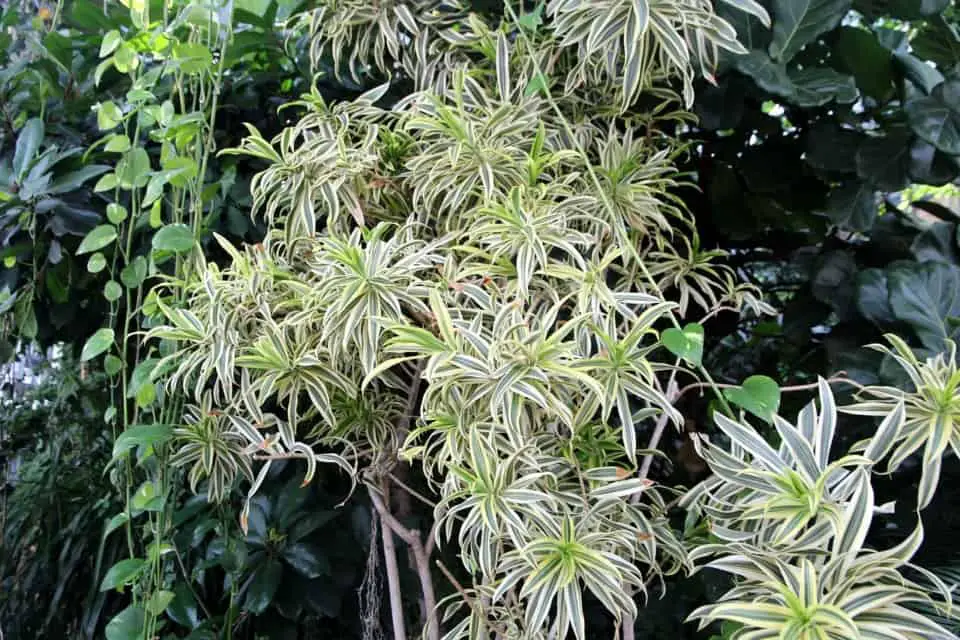
The best soil for a spider plant is a light, well-draining mix with a pH of 6.0–7.0 that retains just enough moisture without becoming waterlogged.
Combine a quality indoor potting mix with perlite for drainage and coco coir or peat moss for moisture retention.
Key variables include proper aeration, organic matter content, and adequate drainage holes in the pot.
Critical warning: never use dense garden soil or heavy potting mixes indoors, both compact quickly and trap moisture around the fleshy tuberous roots, causing root rot that can kill the plant within weeks.
If you own a spider plant (Chlorophytum comosum), you already know they are among the most forgiving houseplants out there. But forgiving does not mean indestructible.
The single biggest factor in a spider plant’s long-term health is what you grow it in. Get the soil right and your plant will reward you with lush, arching foliage, cascading spiderettes, and minimal fuss for years.
Get it wrong and you will find yourself troubleshooting brown tips, yellow leaves, and root rot no matter how carefully you water.
This guide covers everything you need to know about choosing, building, and maintaining the ideal soil for spider plants, from beginner-friendly commercial mixes to DIY recipes, pH management, and advanced growing media.
What Is the Best Soil for a Spider Plant?
Spider plants are native to tropical and southern Africa, where they grow in the dappled shade of forest floors in loose, well-aerated, organically rich soil that drains readily after rain yet retains a degree of moisture during dry spells.
Replicating those conditions indoors is the foundation of good spider plant care.
The best soil for a spider plant achieves a balance of four properties: drainage so excess water escapes quickly, moisture retention so roots do not dry out completely between waterings, aeration so oxygen reaches the root zone, and a pH between 6.0 and 7.0 so nutrients remain available and fluoride toxicity risk stays low.
Spider plants have thick, fleshy tuberous roots that store moisture and nutrients, a survival mechanism from their native environment.
This means they can tolerate short dry spells, but they are especially vulnerable to prolonged soggy conditions that rot those storage roots.
The right soil drains fast enough to prevent waterlogging while holding just enough moisture to keep the tubers healthy between waterings.
| What You Are Actually Growing In Spider plants are classified in the family Asparagaceae. Their tuberous root system distinguishes them from most other common houseplants and is the reason that soil drainage is even more critical for this species than for many others. Soggy soil around fleshy roots is a direct pathway to fungal root rot. |
Why the Right Soil Mix Makes a Measurable Difference
Choosing the correct growing medium affects nearly every aspect of spider plant health. Here is how the soil connects to outcomes you can observe:
| Soil Property | What Happens When Right | What Happens When Wrong |
| Good drainage | Roots stay firm, plant produces spiderettes readily | Waterlogged roots, fungal rot, yellowing leaves |
| Correct pH (6.0–7.0) | Nutrients are available, fluoride absorption is low | Brown leaf tips, chlorosis, nutrient lockout |
| Adequate aeration | Roots receive oxygen, beneficial microbes thrive | Compaction, anaerobic conditions, poor growth |
| Moisture retention | Steady hydration without overwatering | Rapid dry-out, stress, leaf curl and browning |
| Nutrient content | Steady green growth, reduced fertilizer need | Pale leaves, slow growth, poor spiderette production |
Key Soil Properties Spider Plants Need
Drainage and Aeration
Drainage is the single most important property. Water should flow freely through the pot within a few seconds of being poured on the surface.
If water pools on top for 30 seconds or more, the mix is too dense. Adding perlite, coarse sand, orchid bark, or pumice opens up the structure and allows water to escape while also creating pockets of air in the root zone.
Moisture Retention
Despite needing good drainage, spider plants do not want bone-dry soil. Ingredients like coco coir, peat moss, and compost act as a sponge, holding moisture long enough for the roots to absorb what they need.
The goal is a mix that feels damp but never wet to the touch an hour after watering.
pH Between 6.0 and 7.0
Spider plants thrive in slightly acidic to neutral soil. Within this range, macronutrients like nitrogen, phosphorus, and potassium are most bioavailable.
Equally important, fluoride, a mineral commonly found in municipal tap water and some fertilizers, is least soluble at a pH above 6.0, reducing the risk of brown leaf tips caused by fluoride accumulation.
Soil that drifts below pH 6.0 becomes overly acidic, and if it rises above 7.5 the plant begins to struggle with nutrient uptake.
Organic Matter
Organic components such as compost, worm castings, and pine bark provide slow-release nutrition, support beneficial microbial populations, and help maintain a spongy, open soil structure.
A soil mix that is purely inorganic (like straight perlite or LECA) can grow spider plants but will require regular liquid fertilization to compensate for the lack of inherent nutrients.
What You Need: Soil Ingredients and Supplies
| Item | Purpose / Why It Matters |
| Quality indoor potting mix | Provides the base structure, organic matter, and initial nutrients |
| Perlite (coarse grade) | Improves drainage and aeration; prevents compaction; lightweight |
| Coco coir (or peat moss) | Retains moisture; coco coir is pH neutral and sustainable; peat is slightly acidic |
| Worm castings or compost | Adds slow-release nutrients and beneficial microbes |
| Orchid bark (optional) | Extra aeration and texture; useful in very humid climates |
| Pumice (optional) | Can replace or supplement perlite; very porous and long-lasting |
| Limestone or dolomite lime | Raises soil pH if mix becomes too acidic; also adds calcium and magnesium |
| pH meter or test strips | Allows you to verify and maintain the 6.0–7.0 range |
| Pot with drainage holes | Non-negotiable; excess water must be able to escape freely |
| Clean container or bucket | For mixing DIY soil batches |
| Gloves | Protect hands when handling amendments and fertilizers |
Soil Options Compared: Which Approach Is Right for You?
| Soil Approach | Pros | Cons / Watch-outs |
| Standard indoor potting mix alone | Convenient, affordable, readily available at any garden center | Many brands are too dense; can compact over time; drainage varies widely |
| Amended potting mix (DIY recipe) | Customizable drainage and nutrition; best long-term results | Requires multiple ingredients; slightly more effort upfront |
| Tropical-formula commercial mix (e.g., Miracle-Gro Tropical) | Formulated for drainage; less prone to fungus gnats; ready to use | More expensive; less control over exact composition |
| African violet mix | Ideal pH and texture; good nutrient profile; excellent for encouraging flowering | Slightly higher cost than standard mix; fewer brands available |
| Cactus/succulent mix (amended) | Excellent drainage; light; reduces overwatering risk | Low moisture retention; drains too fast without adding coco coir; lower nutrients |
| Soilless/LECA (semi-hydro) | Maximum drainage and aeration; no soil-borne pests | No inherent nutrients; requires liquid fertilizer every watering; learning curve |
| Pro Tip: Grade of Perlite Matters Use coarse-grade perlite rather than fine or medium grade. Coarse perlite maintains larger air pockets in the soil, delivers better long-term drainage, and resists the tendency to float to the surface when watered. Fine perlite compacts into the mix and offers less drainage benefit over time. |
How to Mix the Best Spider Plant Soil: Step-by-Step
Making your own mix takes about ten minutes and gives you full control over drainage, moisture retention, and nutrients. The following recipe works for both established plants and new transplants.
Step 1; Gather Your Ingredients
Assemble 2 parts quality indoor potting mix, 1 part coarse perlite, and 1 part coco coir. Optionally, add a quarter part of worm castings for nutrition and a small handful of orchid bark for extra aeration.
These proportions produce a mix that drains well but stays lightly moist, the sweet spot for spider plants.
| Tip: Pre-Moisten Coco Coir Coco coir often comes compressed and dry. Soak it in water for 15–30 minutes and squeeze out excess moisture before mixing it into your soil. Dry coco coir can repel water when first planted, creating dry pockets around roots. |
Step 2: Mix Thoroughly
Combine all ingredients in a clean bucket or potting tray. Use your hands or a trowel to work the mix until the texture is uniform, light, fluffy, and slightly damp.
The mix should clump loosely when squeezed but fall apart easily when released, indicating the right balance of moisture and aeration.
| Warning: Do Not Use Garden Soil Garden or outdoor soil should never be used for potted spider plants. It is too dense, compacts rapidly in containers, can introduce pests and pathogens, and lacks the drainage indoor plants need. Even if your garden soil seems fine and loose outdoors, it behaves completely differently when confined to a pot. |
Step 3: Test the pH (Optional but Recommended)
Use a simple pH meter or test strips to check the mix before potting. Target a reading of 6.0–7.0. If the pH is below 6.0 (too acidic), stir in a small amount of dolomite lime and retest after 30 minutes.
If above 7.5, adding a little sulfur powder or acidic granules will bring it down. Most commercial potting mixes already fall in the correct range, but peat-heavy mixes can be more acidic.
Step 4: Pot Your Spider Plant
Fill your pot about one-third full with the prepared mix. Set the plant so the top of the root ball sits roughly three-quarters of an inch below the pot rim.
Fill in around the roots, pressing gently to remove large air pockets without compacting the soil. Leave a small gap at the top for watering.
| Tip: Choose the Right Pot Size Spider plants prefer to be slightly root-bound. Choose a pot only 1–2 inches larger in diameter than the current root ball. A pot that is too large holds excess soil moisture that the roots cannot absorb, increasing root rot risk. |
Step 5: Water Thoroughly After Potting
Water the newly potted plant slowly and deeply until water drains from the bottom of the pot. This settles the soil around the roots, eliminates air pockets, and helps the plant begin establishing in its new medium.
Use room-temperature water and, if possible, filtered or distilled water, spider plants are sensitive to fluoride in tap water.
| Warning: Fluoride Toxicity Is a Real Risk Spider plants are among the most fluoride-sensitive houseplants. Fluoride accumulates in the leaf tissue and causes brown leaf tips, a condition that is permanent once it appears. Using fluoride-treated municipal tap water over months or years compounds the problem. Switch to distilled, filtered, or rainwater, and flush the soil once a month by watering heavily until water runs freely from the drainage holes, which leaches accumulated salts and fluoride out of the mix. |
Step 6: Store Leftover Mix Properly
If you have unused DIY mix, store it in a sealed airtight container in a cool, dry location. A well-prepared mix stays viable for several months.
Discard any mix that develops a foul odor, visible mold, or signs of insect activity, these indicate microbial imbalance or contamination.
Top Commercial Potting Mixes for Spider Plants
If mixing your own soil is not appealing, several commercial products work well.
The key is to choose a mix that is specifically labeled as well-draining and formulated for indoor or tropical plants. Below are options growers commonly use, with what makes each suitable.
| Product | Why It Works for Spider Plants | Best For |
| Miracle-Gro Tropical Potting Mix | Contains lava rock for drainage; no compost or bark, which reduces fungus gnats; designed for tropical species | Beginners who want a ready-to-use solution |
| rePotme Spider Plant Imperial Mix | Formulated specifically for spider plants; balanced pH and drainage; premium ingredients | Growers who want a species-specific option |
| African violet potting mix | Ideal pH range; contains perlite and dolomite lime for pH stability; promotes flowering | Growers wanting to encourage blooms |
| FoxFarm Ocean Forest | Rich in organic matter, beneficial microbes, and balanced pH around 6.3–6.8; excellent for heavy feeders | Experienced growers prioritizing nutrition |
| Espoma Organic Potting Mix | All-natural ingredients; contains Myco-tone mycorrhizae to support root development; good moisture control | Organic growers; good for long-term soil health |
| Tip: Amend Commercial Mixes for Better Results Even the best commercial mixes benefit from adding extra perlite. For every 4 cups of commercial mix, add 1 cup of coarse perlite. This single step significantly improves drainage and reduces compaction, which is especially useful in plastic pots that do not breathe. |
Understanding and Managing Soil pH for Spider Plants
Soil pH determines which nutrients are chemically available to plant roots. Even if your mix contains adequate nutrition, a pH outside the 6.0–7.0 range means the plant cannot access it, a condition called nutrient lockout.
For spider plants, pH management also directly affects fluoride absorption.
| pH Level | Effect on Spider Plant | Corrective Action |
| Below 5.5 | High fluoride absorption, nutrient lockout, root stress | Add dolomite lime or ground limestone |
| 5.5–6.0 | Slightly acidic, acceptable but suboptimal | Add a small amount of dolomite lime |
| 6.0–7.0 | Ideal range, nutrients are available, fluoride is low | Maintain as-is |
| 7.0–7.5 | Slightly alkaline, some nutrient availability reduction | Add elemental sulfur or acidic granules |
| Above 7.5 | Significant nutrient lockout, poor growth | Repot into fresh, properly pH-balanced mix |
To test your soil pH: press a probe meter 2–3 inches into moist soil and read the value after 60 seconds. For the most accurate reading, test multiple locations in the pot and average them.
Test kits using chemical indicators work well too and cost under $10 at most garden centers.
When to Repot and Refresh the Soil
Spider plants grow quickly, and their fleshy tuberous roots can exhaust both the space and nutrients in a pot within one to two growing seasons. Knowing when to refresh the soil is as important as knowing what to use.
| Sign | What It Indicates | Action Required |
| Roots growing from drainage holes | Plant is severely root-bound | Repot into next size pot with fresh mix |
| Roots visible at soil surface | Pot is crowded; roots seeking space | Repot soon |
| Water pools on surface, drains very slowly | Soil is compacted | Repot; amend new mix with extra perlite |
| Water drains instantly with no absorption | Soil has broken down or become hydrophobic | Repot with fresh mix; pre-moisten new mix well |
| No new growth during growing season | Nutrient depletion or compaction | Repot or top-dress with compost/worm castings |
| 3–5 years since last repot | Soil quality has degraded significantly | Repot proactively in spring |
| Best Time to Repot Repot spider plants in early spring, just before the growing season begins. This timing minimizes transplant shock because the plant is entering its most active growth phase and can recover quickly. Avoid repotting in winter when the plant is semi-dormant and less able to recover from root disturbance. |
| Do Not Repot Into a Much Larger Pot Jumping to a pot more than 2 inches larger than the current root ball is a common beginner mistake. Excess soil in an oversized pot holds moisture the roots cannot reach, staying wet for extended periods and creating exactly the conditions that cause root rot. Always size up gradually. |
Troubleshooting: Soil-Related Problems with Spider Plants
Brown Leaf Tips
Brown tips are the most common complaint from spider plant owners. The cause is almost always one of three things: fluoride toxicity from tap water, salt buildup from fertilizer, or low humidity.
Fluoride accumulates in leaf tips over time and causes irreversible browning that starts at the very end of each leaf.
The solution is to switch to distilled or filtered water and flush the soil monthly with heavy watering to leach out accumulated minerals. Trim affected tips with clean scissors, the browning will not reverse, but new growth will be clean.
Yellow Leaves
Yellowing leaves that are soft and drooping typically indicate overwatering and possibly root rot, the soil is staying too wet.
If the leaves are yellow but firm, the cause is more likely nitrogen deficiency or very low light.
Check the soil mix for drainage: push your finger 2 inches into the mix; if it feels wet more than three days after watering, the mix needs more perlite or a better-draining pot.
If root rot is suspected, unpot the plant, trim any brown mushy roots, and repot into completely fresh, pre-moistened mix.
Compacted Soil
Over time, even good potting mixes break down and compact. Signs include water taking more than a few seconds to begin draining and visible cracks on the soil surface when dry.
Compaction reduces oxygen at the root zone and can strangle roots. The fix is repotting into fresh, properly amended mix.
In the interim, use a chopstick or blunt pencil to gently poke several holes 2–3 inches deep around the perimeter of the pot, this temporarily restores air channels without damaging roots significantly.
| Warning: Compaction + Overwatering = Root Rot Compacted soil and excessive watering together create anaerobic conditions where harmful fungi like Pythium and Fusarium thrive. Root rot progresses rapidly in these conditions and can become fatal within weeks. If you notice a foul odor from the soil, mushy stems at the base, or completely soft leaves, suspect root rot and act immediately by repotting. |
Fungus Gnats in the Soil
Fungus gnats are small flies whose larvae feed on organic matter and plant roots in the soil. They are attracted to moist soil rich in peat or bark.
The most effective prevention is allowing the top inch or two of soil to dry completely between waterings, since gnat larvae need moisture to survive. Switching to a tropical mix that contains minimal compost or bark (such as Miracle-Gro Tropical) also helps.
Yellow sticky traps capture adult gnats while you address the underlying moisture issue. Beneficial nematodes (Steinernema feltiae) applied to the soil kill larvae without harming the plant.
| Problem | Likely Cause | Solution | Prevention |
| Brown leaf tips | Fluoride toxicity or salt buildup | Switch to distilled water; flush soil monthly | Use filtered or rainwater; avoid overfertilizing |
| Yellow, drooping leaves | Overwatering / root rot | Check roots; repot if rotted; reduce watering | Ensure drainage holes; use perlite-amended mix |
| Compacted soil | Soil breakdown over time | Repot into fresh amended mix | Repot every 1–2 years; use quality mix |
| Fungus gnats | Moist peat-rich soil | Allow soil to dry; use sticky traps; nematodes | Use tropical mix; water less frequently |
| No new growth | Nutrient depletion or root-bound | Fertilize or repot | Repot every 1–2 years; fertilize spring to summer |
| Leaf curl / wilting | Underwatering or low humidity | Water when top inch is dry; increase humidity | Check soil moisture before each watering |
Soil Considerations for Different Spider Plant Varieties
There are several distinct varieties of Chlorophytum comosum sold in the US, and while all prefer the same general soil conditions, there are minor differences worth noting.
| Variety | Description | Soil Notes |
| Vittatum | Dark green leaves with a wide cream stripe down the center; most common variety | Standard mix; slower growth than all-green forms |
| Variegatum (Reverse Variegatum) | Green center stripe with white margins; fewer spiderettes than Vittatum | Prefers slightly more moisture retention; prone to browning in very dry mixes |
| Bonnie (Curly Spider Plant) | Curly, twisted foliage; compact habit | Same mix as standard; slightly more drought-tolerant due to compact root mass |
| Hawaiian / Green Spider Plant | All solid green leaves; fastest-growing variety | Benefits from richer mix with more worm castings to support rapid growth |
| Atlantic / Milky Way | Speckled white and green variegation; rare | Same mix as standard varieties |
Advanced and Alternative Growing Media
LECA and Semi-Hydroponic Growing
Lightweight expanded clay aggregate (LECA) is an increasingly popular alternative to soil for spider plants.
The clay pebbles wick water from a reservoir at the base of the pot via capillary action, delivering consistent moisture directly to roots while keeping the upper root zone aerated.
Benefits include zero soil compaction, no fungus gnats, and very visible water levels. The trade-off is that LECA contains no nutrients, so liquid fertilizer must be added to the reservoir water at every watering during the growing season.
Spider plants transition to LECA well, rinse all soil from the roots under room-temperature water before transferring.
Orchid Bark as a Component
Pine or fir bark from orchid mixes is an excellent amendment for spider plant soil. Bark chunks create macro-pores in the mix that provide both drainage and air channels.
As bark slowly breaks down over 12–18 months, it releases small amounts of nutrients.
Many experienced growers use a mix of 40% potting soil, 30% perlite, 20% coco coir, and 10% orchid bark for maximum aeration while still retaining adequate moisture.
Compost and Worm Castings as Boosters
Adding up to 10% worm castings to any spider plant mix delivers a broad-spectrum slow-release nutrient boost without the risk of fertilizer burn.
Worm castings are pH neutral, contain beneficial microbes, and improve soil structure. Compost serves a similar purpose but varies more in its nutrient content.
Neither should make up more than 20% of the total mix volume, as excess organic matter can reduce drainage and raise the risk of fungal problems.
| Tip: Coffee Grounds, Use Sparingly Coffee grounds are sometimes recommended as a soil amendment for spider plants. They do add nitrogen and can acidify soil slightly. However, adding too many coffee grounds makes the mix overly acidic (below pH 6.0) and compact. If you use them at all, limit to 5–10% of the total mix and test pH afterward. |
Outdoor Soil for Spider Plants in Warmer Climates
In USDA hardiness zones 9–11 (parts of Florida, California, Texas, and Hawaii), spider plants can be grown outdoors year-round as ground covers or container plants.
Outdoors, most well-draining garden soils that are organically amended will work, as natural rainfall and soil biology compensate for conditions that would be problematic in a pot.
Avoid clay-heavy soils and areas with standing water. When growing outdoors in containers, the same principles apply, well-draining mix with perlite or sand amendment.
Frequently Asked Questions
Can I use regular potting soil for spider plants?
Yes, regular indoor potting soil can work for spider plants, but it usually needs amending. Most standard potting mixes are too dense and compact too quickly when used alone in a pot. The fix is to add one part coarse perlite for every three parts potting mix.
Choose a quality brand labeled for indoor plants, cheap mixes tend to be very peat-heavy, which can push the pH lower than the 6.0–7.0 range spider plants prefer and creates drainage problems over time.
What is the ideal pH for spider plant soil?
Spider plants perform best in soil with a pH between 6.0 and 7.0, with the sweet spot being 6.0–6.5. Within this range, key nutrients like nitrogen, iron, and phosphorus are most accessible to plant roots.
Equally important, keeping pH above 6.0 reduces the plant’s uptake of fluoride, which is the primary cause of brown leaf tips in spider plants grown with municipal tap water.
Test your soil with an inexpensive pH meter or test strips and adjust using dolomite lime (to raise pH) or sulfur granules (to lower it).
Is cactus soil good for spider plants?
Cactus soil is not ideal on its own, but it can work when amended. Pure cactus mix drains too quickly and contains very little organic matter, meaning spider plants would need watering almost daily and regular fertilization to compensate.
If cactus mix is what you have available, blend it half-and-half with standard potting mix and add a small amount of coco coir for moisture retention. This brings it closer to what spider plants actually need.
How often should I change the soil for my spider plant?
Spider plant soil should be fully refreshed every one to two years, ideally in early spring.
Over time, potting mix breaks down: organic matter decomposes, the mix compacts, nutrients are depleted, and salts from fertilizer and tap water accumulate.
Even if the plant does not appear root-bound, old, degraded soil is one of the most common causes of gradual decline in otherwise well-cared-for spider plants.
If full repotting is not yet warranted, top-dressing (replacing the top inch of soil with fresh mix and a sprinkling of worm castings) can extend the soil’s life by another season.
Why does my spider plant have brown tips even with good soil?
Brown tips on spider plants are almost always caused by one of two things: fluoride accumulation from tap water or salt buildup from fertilizer.
Both are soil-related problems, even if the soil mix itself is correct. The fluoride and salts build up in the growing medium over time and absorb into leaf tissue.
The permanent solution is to switch to distilled, filtered, or rainwater and to flush the soil heavily once a month, watering until a large volume of water runs from the drainage holes.
This process, called leaching, removes accumulated minerals from the root zone.
Can I use African violet soil for spider plants?
African violet potting mix is one of the better alternatives to a general indoor mix for spider plants.
It has an appropriate pH range, typically contains both perlite and dolomite lime for drainage and pH stability, and provides a nutrient profile that suits spider plants well.
Some growers report that African violet soil encourages spider plants to produce flowers more readily, possibly because the pH and phosphorus levels are particularly suitable.
You can use it straight from the bag or add a small amount of extra perlite for improved drainage.
Do spider plants like perlite in their soil?
Yes, perlite is one of the most beneficial amendments you can add to spider plant soil. It improves drainage, prevents compaction, and adds air pockets around the root zone without affecting pH or adding nutrients.
The key is to use coarse-grade perlite, which creates larger air channels and lasts longer than fine-grade.
One concern sometimes raised is that perlite can contribute fluoride to the soil mix; however, the amount is minimal compared to regular tap water use.
The drainage benefit of perlite far outweighs any fluoride contribution from the material itself.
Can spider plants grow in water instead of soil?
Spider plant cuttings (spiderettes) can be rooted and grown in water for a period, and many growers start new plants this way.
However, mature spider plants with developed tuberous roots do not thrive long-term in water alone.
The fleshy tubers are prone to rotting when fully submerged, and the nutrient demands of a mature plant cannot be met by water without supplementation.
If you want to grow spider plants without traditional soil, the better option is LECA (semi-hydroponics), which keeps the roots in a moist but aerated environment.
Baby spiderettes can root in plain water and then be transitioned to soil or LECA once roots reach 1–2 inches.
Key Success Factors: Your Spider Plant Soil Checklist
Review this list before potting or repotting your spider plant to make sure all the conditions for success are in place.
- Use a well-draining mix, water should flow from drainage holes within seconds of watering.
- Add perlite (coarse grade) to any commercial mix at a ratio of 1 part perlite to 3 parts mix.
- Verify soil pH is between 6.0 and 7.0 using a pH meter or test strips.
- Always use a pot with drainage holes, no exceptions.
- Size pots only 1–2 inches larger than the current root ball to prevent excess moisture retention.
- Use distilled, filtered, or rainwater to avoid fluoride and salt accumulation.
- Flush the soil monthly with heavy watering to leach accumulated minerals.
- Repot every 1–2 years in early spring with fresh, amended potting mix.
- Do not over-fertilize, excess fertilizer causes salt buildup and brown tips.
- Store unused DIY mix in a sealed container in a cool, dry place for up to 3–4 months.
- Monitor for soil compaction, poke soil gently with a chopstick if water begins pooling.
- Remove plant from oversized decorative pots (cachepots) when watering to allow full drainage.
Final Thoughts
Spider plants are among the most adaptable and rewarding houseplants you can grow.
They tolerate a fair amount of neglect, but giving them the right growing medium from the start is the single best investment you can make in their long-term health.
A light, well-draining, organically rich mix with a pH of 6.0–7.0 will support vigorous growth, encourage the production of spiderettes, and dramatically reduce the most common problems like brown tips, root rot, and slow growth.
Whether you choose a quality commercial tropical mix, amend standard potting soil with perlite and coco coir, or mix your own from scratch, the principles remain the same: drainage first, moisture retention second, correct pH always.
Follow the guidance in this article and your spider plant will thrive for years.
| What’s Next Now that your spider plant is growing in the best possible soil, your next step is to master watering technique. The number one cause of spider plant death is overwatering, and good soil alone will not prevent it if you water too frequently. Check the soil moisture by inserting your finger 1–2 inches into the mix, only water when it feels dry at that depth. As your plant matures and begins producing spiderettes, you will also want to learn how to propagate those baby plants. Each spiderette can be rooted in a small pot of the same well-draining mix described in this guide, giving you an endless supply of new plants for your home or to share with friends. |
Mariel is a plant enthusiast and writer based in the UK with a passion for houseplants and indoor growing.
She has spent the last few years building an ever-growing collection of indoor plants and learning the hard way which ones will survive her busy schedule.
At Bean Growing she writes about houseplant care, common plant problems, and outdoor gardening.