
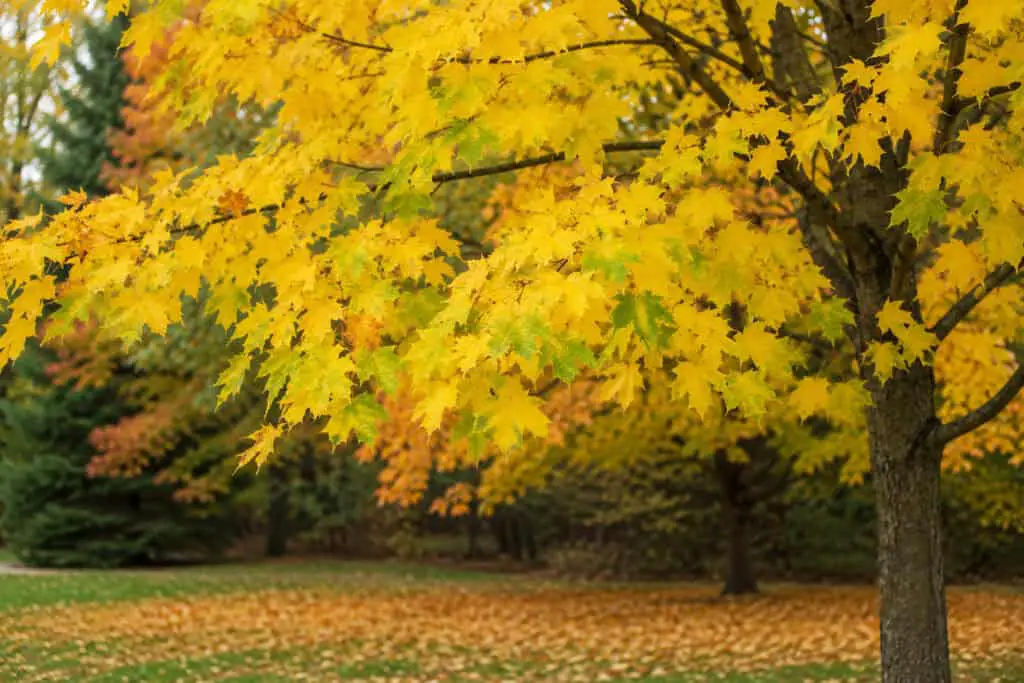
Acer trees are grown for their foliage above almost anything else, so when the leaves begin turning yellow instead of holding their expected green, red, or burgundy tones, it is understandable to feel concerned.
The good news is that yellowing leaves on an Acer tree are rarely a sign that the tree is dying.
If a tree is showing more serious signs of decline alongside the yellowing, our guide on why an Acer tree is dying covers the wider range of causes in more depth.
In the great majority of cases, the yellowing points to one of a small number of identifiable and correctable problems, and a tree that looks pale and unwell in summer can return to a full, healthy canopy the following year.
This guide covers every common cause of Acer tree leaves turning yellow, with a particular focus on overwatering and root rot, since these are among the most frequent and most serious causes of yellowing in Acer trees grown in gardens, borders, and containers.
It is a natural companion to our guides on why a Japanese maple is turning green and why a Japanese maple is turning brown, since yellowing often sits on the same spectrum of colour change as those two patterns.
Each cause is explained in detail, the pattern of yellowing it produces is described, and a practical fix is given for each one.
Whether your Acer is newly planted or established, grown in open ground or in a pot, and whether you are gardening in the UK or the US, this guide will help you work out exactly what is happening and what to do about it.
Quick Diagnosis: Identify Your Yellowing Pattern
The pattern and position of yellowing on your Acer tree is the fastest way to narrow down the likely cause.
Use the table below to identify the most probable explanation before reading further.
| What You Are Seeing | Most Likely Cause | Urgency |
| Yellowing leaves on a tree sitting in wet or boggy soil | Overwatering and root rot | High; check roots immediately |
| Yellow leaves with green veins still visible | Iron deficiency or alkaline soil pH | Medium; test soil pH |
| General pale yellowing across the whole canopy | Nitrogen deficiency or poor soil fertility | Medium; assess feeding programme |
| Yellowing that starts on the lower or inner leaves first | Natural leaf shedding or early nutrient deficiency | Low to medium; monitor |
| Yellow leaves with brown, scorched tips | Drought stress or sun and heat scorch | Medium; review watering and position |
| Yellowing on a container grown Acer despite regular watering | Root bound pot or waterlogged container | Medium; check roots and drainage |
| Sudden yellowing and wilting on one side of the tree | Verticillium wilt or physical root damage | High; assess promptly |
| Yellow mottled leaves with sticky residue or visible insects | Aphid or scale insect infestation | Medium; treat within days |
| Yellowing leaves dropping early in autumn before normal colour change | Stress shedding from a difficult growing season | Low; usually resolves the following year |
| Premature yellowing from August onwards in the UK | Normal seasonal colour change | None; completely normal |
Understanding the Acer Tree: Why Yellowing Happens
Acer is the genus name for maples, and it includes everything from the compact Japanese maple, Acer palmatum, through to large field and Norway maples grown as specimen or shade trees.
If you are choosing between Acer varieties, our comparison of Japanese maple versus red maple explains how the two differ in habit and care.
Most Acer species share a preference for moist, well drained, slightly acidic soil with good organic matter content, and most evolved in woodland or woodland edge conditions with reliable rainfall and protection from extremes.
This background matters because yellowing leaves are almost always the visible result of a stress placed on the root system or the leaf tissue, and that stress usually traces back to a condition that differs from what the tree is naturally suited to.
Waterlogged roots, compacted soil, alkaline pH, nutrient shortages, and root restriction in containers are the most common departures from ideal conditions, and each produces a recognisable yellowing pattern.
Why Overwatering Is Such a Common Cause
Of all the causes covered in this guide, overwatering and the root rot it causes are responsible for a disproportionately large share of yellowing Acer trees, particularly in gardens with heavy clay soil, in containers without adequate drainage holes, and among well meaning owners who water on a fixed schedule rather than in response to actual soil conditions.
Acer roots need oxygen as much as they need water.
When soil remains saturated for extended periods, the air spaces between soil particles fill with water, oxygen is excluded, and the fine feeder roots responsible for absorbing water and nutrients begin to suffocate and die.
A tree in this condition shows yellowing leaves not because it lacks water, but because its damaged roots can no longer take up water and nutrients effectively, even though the soil around them is wet.
Cause 1: Overwatering and Root Rot
How Overwatering Leads to Yellow Leaves
Overwatering is one of the two most frequent causes of yellowing in Acer trees, alongside iron deficiency, and it is also one of the most serious if left unaddressed.
The mechanism works in stages. Excess water in the soil displaces oxygen, the fine roots responsible for nutrient uptake begin to die back, and the tree, no longer able to absorb iron, nitrogen, and other nutrients efficiently, shows the visible symptom of yellowing leaves.
In the early stages, yellowing from overwatering typically appears on the lower and inner leaves first, since these are often the oldest growth and the first to be affected when the root system is compromised.
As the problem progresses, yellowing spreads upward and outward through the canopy, and leaves may also wilt, curl, or drop prematurely, even though the soil is clearly wet.
This combination, wilting and yellowing despite wet soil, is one of the clearest diagnostic signs that overwatering rather than drought is the cause.
A drought stressed tree wilts because the soil is dry. An overwatered tree wilts and yellows because the soil is wet but the roots can no longer function within it.
Acer Tree Root Rot: Recognising the Signs
Root rot, most commonly caused by Phytophthora species, develops once roots have been weakened by prolonged waterlogging and become vulnerable to fungal infection.
According to the Royal Horticultural Society, Phytophthora root rot is the second most common cause of root and stem base decay in trees and shrubs after honey fungus, and it is primarily a disease of heavy or waterlogged soil where displaced air causes roots to effectively drown.
Acer tree root rot presents with several recognisable signs beyond the yellowing leaves themselves.
- Soil that remains wet, boggy, or slow to drain for days after rainfall or watering
- A sour, unpleasant, or musty smell coming from the soil around the base of the tree
- Discolouration, dark staining, or softening of the bark at or just below soil level
- Roots that appear brown, soft, and slimy rather than firm and pale when inspected
- Progressive dieback of branches, often starting low in the canopy and moving upward
If several of these signs are present alongside yellowing leaves, root rot is the most likely explanation, and action should be taken without delay, since advanced root rot is significantly more difficult to reverse than early stage waterlogging.
How to Fix Acer Overwatering and Root Rot
The first and most urgent step is to stop watering immediately and allow the soil to dry out as much as possible.
Continuing to water a tree that is already sitting in saturated soil will only worsen the oxygen deprivation at the root zone.
For container grown Acer trees, remove the tree from its pot and inspect the root ball directly. Healthy roots are firm and pale cream to white.
Affected roots are brown, soft, and will often pull apart or collapse under light pressure.
Trim away all visibly rotted roots using clean, sharp secateurs, and repot into a fresh, free draining compost in a clean container with unobstructed drainage holes.
For Acer trees in open ground, improving drainage is the priority.
Adding coarse grit or horticultural sand to the planting area, redirecting surface water away from the root zone, and in persistent cases installing a simple rubble or French drain will all help.
Planting on a slightly raised mound of soil, even a modest 15 to 20 centimetres above the surrounding ground level, can make a significant difference on heavy or slow draining sites.
Getting the planting conditions right from the outset is the best long term prevention; our guide on planting a Japanese maple tree covers site selection and drainage in more detail.
Going forward, water only when the soil at root depth feels dry to the touch, rather than on a fixed schedule.
A 7 to 10 centimetre layer of mulch around the base, kept clear of the trunk itself, helps regulate soil moisture and reduces the temptation to overwater.
| A Quick Way to Tell Overwatering Apart From Drought Check the soil at a depth of about 5 to 8 centimetres near the root zone. If it feels consistently wet, cold, or waterlogged, overwatering is the likely cause. If it feels dry and crumbly, drought stress is more likely, even if the leaves look similar. Acting on the wrong diagnosis, particularly adding more water to an already overwatered tree, will make the problem significantly worse. |
Cause 2: Iron Deficiency and Alkaline Soil
How Soil pH Affects Iron Availability
Acer trees generally prefer slightly acidic soil, with a pH in the range of 5.5 to 6.5 considered ideal for most species.
Within this range, iron and other key micronutrients remain chemically available in the soil solution and can be readily absorbed by the roots.
When soil pH rises above 6.5, and particularly above 7.0, iron becomes chemically bound in forms the roots cannot access, regardless of how much iron is actually present in the soil.
North Dakota State University Extension notes that this condition, known as iron chlorosis, is most common in soils with a pH of 7.5 or higher and is frequently linked to the presence of lime, soil compaction, or poor drainage.
The defining feature of iron deficiency is interveinal chlorosis: the leaf tissue between the veins turns yellow while the veins themselves remain a noticeably darker green.
This pattern usually appears first on the youngest leaves at the tips of the branches, since new growth has the highest demand for iron.
If left untreated, the yellow tissue eventually turns brown and the leaf may die and drop.
How to Correct Iron Deficiency in Acer Trees
Testing the soil pH with an inexpensive kit is the essential first step, since several other causes of yellowing can superficially resemble iron deficiency.
If the pH is confirmed to be above 6.5, the priority becomes lowering it and supplying iron in a form the tree can use.
For container grown trees, repotting into an ericaceous compost formulated for acid loving plants is the most reliable fix.
For trees in open ground, applying garden sulphur will gradually lower soil pH over a period of months, while a chelated iron product, often sold as sequestered iron, provides a faster acting source of usable iron and can show visible improvement within two to three weeks of application.
Mulching annually with pine bark, leaf mould, or other naturally acidifying organic matter will help maintain a more favourable pH over the longer term and reduce the likelihood of the problem recurring.
Cause 3: Nitrogen Deficiency and Poor Soil Fertility
Nitrogen is essential for chlorophyll production, and when an Acer tree is grown in poor, depleted, or very sandy soil without adequate organic matter, a general nitrogen shortage can develop.
Unlike iron deficiency, nitrogen deficiency tends to produce an even, overall pale yellowing across the whole leaf, including the veins, rather than the sharp interveinal pattern seen with iron chlorosis.
Nitrogen deficiency typically shows first on the older, lower leaves, since the tree will move available nitrogen to support new growth at the expense of older foliage.
Growth overall may also appear weak, thin, and slower than expected for the time of year.
Correcting nitrogen deficiency is straightforward. A balanced, slow release granular fertiliser applied in spring at the rate recommended on the packaging will usually resolve the problem within a single growing season.
Working well rotted compost or leaf mould into the soil around the root zone each autumn will improve fertility more gradually and reduce the need for repeated chemical feeding.
Cause 4: Drought Stress and Heat
While overwatering is the more common cause of yellowing in Acer trees overall, insufficient water can also cause yellowing, usually accompanied by browning or scorching at the leaf tips and margins.
Drought stressed Acer leaves often turn yellow before they turn brown, as the tree begins shedding chlorophyll in response to water shortage.
This pattern is most common during hot, dry spells in summer, particularly in young or newly planted trees whose root systems have not yet spread widely enough to access deeper soil moisture.
The soil at root depth will feel dry to the touch, distinguishing this cause clearly from overwatering.
Deep, infrequent watering, applied directly at the base of the tree once or twice a week during dry periods, is far more effective than frequent light watering.
A generous mulch layer extending to the drip line will significantly reduce how often supplementary watering is needed.
Cause 5: Container Root Restriction
Acer trees grown in pots for several years without repotting can become root bound, with the root system circling tightly within the container and gradually losing the capacity to take up water and nutrients efficiently.
This produces yellowing leaves even when the watering routine appears correct, because the problem lies in the roots rather than in the amount of water being applied.
A root bound Acer often dries out unusually quickly after watering, sometimes within a day or two, and may show roots emerging from the drainage holes at the base of the pot.
Removing the tree from its container will reveal a dense, tightly circling mass of roots with little visible compost remaining.
Repotting into a container at least two sizes larger, using fresh, free draining compost, and gently teasing out any circling roots before replanting will resolve the issue.
Early autumn or early spring are the best times to repot, avoiding the hottest part of summer when transplant stress is highest.
Cause 6: Pests and Verticillium Wilt
Aphids and Scale Insects
Sap sucking pests such as aphids and scale insects can cause mottled yellowing on Acer leaves, particularly on new growth in spring and early summer.
Affected leaves often show a sticky residue, known as honeydew, which can develop a black sooty mould on the surface.
Treating early with a diluted neem oil or insecticidal soap, applied directly to the affected areas, is usually sufficient to resolve a mild infestation.
Verticillium Wilt
Verticillium wilt is a more serious soilborne fungal disease that blocks the vascular tissue of the tree, restricting water and nutrient flow to individual branches.
It often produces sudden yellowing and wilting on one branch or one side of the tree while the rest appears healthy, a pattern known as flagging. Cutting into an affected branch typically reveals staining within the wood.
There is no cure, and management focuses on removing affected branches promptly and keeping the remainder of the tree as healthy as possible through correct watering and feeding.
All Causes at a Glance: Comparison and Action Summary
| Cause | Yellowing Pattern | Key Distinguishing Feature | Primary Fix | Urgency |
| Overwatering and root rot | Lower canopy first; whole tree in severe cases | Wet or waterlogged soil; sour smell from roots | Stop watering; improve drainage; inspect roots | High |
| Iron deficiency | Interveinal yellowing; veins remain green | Yellow between green veins on younger leaves | Test pH; chelated iron; ericaceous compost | Medium |
| Nitrogen deficiency | General pale yellowing across canopy | Older leaves yellow first; weak growth | Balanced slow release feed in spring | Medium |
| Drought stress | Yellow with brown scorched tips and margins | Dry soil at root depth; wilting in heat | Deep watering; mulch; check position | Medium |
| Verticillium wilt | Random branch flagging; sudden wilting | Brown or green staining inside cut wood | Remove affected branches; keep tree healthy | High |
| Container root restriction | Yellowing despite regular watering | Roots circling pot; rapid drying after watering | Repot into larger container with fresh compost | Medium |
| Aphids or scale insects | Mottled yellowing; sticky honeydew residue | Visible insects; sooty mould on leaves | Neem oil; insecticidal soap; horticultural oil | Medium |
| Normal seasonal change | Even yellowing from late summer onward | Timing matches autumn colour change for variety | None needed | None |
Seasonal Care Calendar to Prevent Yellowing
Adjusting care through the year is one of the most effective ways to prevent yellowing before it develops, particularly where overwatering and drainage are the underlying risk.
| Month | Key Tasks and Watch Points |
| January to February | Check container grown trees are not sitting in water; avoid heavy pruning while sap is rising |
| March | Apply mulch if not done in autumn; test soil pH if yellowing was a problem the previous year |
| April | Watch new growth for early yellowing; avoid overwatering as soil warms and rainfall continues |
| May | Apply a light spring feed if soil fertility is poor; begin monitoring drainage during wet spells |
| June | Check container drainage holes are clear; watch for aphids on new growth |
| July | Water deeply only when soil is dry at root depth; avoid routine watering on a fixed schedule |
| August | Continue monitoring for drought related yellowing in hot spells; do not fertilise after mid month |
| September | Good time to repot container trees showing yellowing from root restriction |
| October | Apply autumn mulch; expect natural yellowing as part of seasonal colour change |
| November to December | Improve site drainage if waterlogging was an issue during the growing season |
Frequently Asked Questions
My Acer tree has yellow leaves but the soil feels wet. What does this mean?
This combination is one of the clearest signs of overwatering or root rot. A tree with healthy roots sitting in dry soil shows yellowing from drought.
A tree with damaged roots sitting in wet soil shows yellowing because those roots can no longer absorb water and nutrients properly, even though plenty of moisture is present.
Stop watering immediately and check the root system, particularly if a sour smell is present around the base.
Will yellow leaves on my Acer turn green again?
Once a leaf has turned yellow due to nutrient or water stress, that particular leaf will not return to green.
However, if the underlying cause is identified and corrected, the tree will typically produce healthy green new growth in the following weeks or in the next growing season, and the overall appearance of the tree will recover.
How can I tell if my Acer has root rot without digging it up?
Persistent waterlogging around the base, a sour or musty smell from the soil, and discolouration or softness at the base of the trunk are all signs that can be observed without fully excavating the root system.
For container grown trees, it is straightforward and worthwhile to remove the tree from its pot for a direct visual check.
Is yellowing in autumn always a problem?
No. Many Acer varieties naturally turn yellow, orange, or red as part of their autumn colour change, and this is a normal and attractive seasonal process rather than a sign of ill health.
Concern is warranted when yellowing appears outside the expected autumn window, develops unevenly across the canopy, or is accompanied by wilting, leaf drop, or visible signs of root or pest problems.
Does the variety of Acer I grow make a difference?
Yes. Some Acer varieties are naturally more prone to stress related colour change than others, and choosing a variety suited to your soil and conditions reduces the risk of yellowing developing in the first place.
Our guide to the benefits of owning a Japanese maple and our overview of Japanese maple light requirements are both useful starting points if you are still deciding where and what to plant.
If root space is limited, our list of small trees with non-invasive roots is also worth a look.
Key Takeaways
- Overwatering and root rot are among the most common and most serious causes of yellowing leaves on Acer trees, particularly where soil drains poorly or containers lack adequate drainage holes.
- Wilting and yellowing despite wet soil is a strong sign of overwatering rather than drought, and adding more water will make the problem worse, not better.
- Iron deficiency produces a distinctive pattern of yellow leaf tissue between green veins, usually on younger growth, and is corrected by testing and adjusting soil pH.
- Nitrogen deficiency causes an even, overall pale yellowing, usually starting on older leaves, and responds well to a balanced slow release feed.
- Container grown Acer trees should be checked for root restriction if yellowing develops despite a seemingly correct watering routine.
- Autumn yellowing on many Acer varieties is a completely normal part of seasonal colour change and is not a cause for concern.
Final Thoughts
Yellowing leaves on an Acer tree are a common concern, but they are also one of the more diagnosable problems a gardener will encounter, provided the pattern of yellowing is read carefully before action is taken.
Wet soil combined with wilting and yellowing points toward overwatering and possible root rot. Yellow tissue between green veins points toward iron deficiency and soil pH.
An even, pale yellowing across the whole canopy points toward poor soil fertility.
Each of these requires a different response, and applying the wrong fix, particularly watering a tree that is already overwatered, will set back recovery rather than support it.
With the cause correctly identified and addressed, most Acer trees recover fully, and a tree that looks pale and concerning in one growing season can return to a full, healthy, colourful canopy the next.
For a broader look at decline symptoms beyond yellowing, see our guide on Acer tree dying.
Hi, I'm Matt,
An amateur gardener with a houseplant habit that got slightly out of hand.
I started Bean Growing to share what I've learned from a few years of trial, error, and the occasional dead plant.
I grow a mix of houseplants and outdoor shrubs in the UK but try to expand my knowledge to the US. I try to write about what actually works